
Insulation Company in Quail Valley, CA
Blown in insulation is the retrofit workhorse for Quail Valley homes, and it’s where most of our projects here start. The houses in this Canyon Lake-adjacent community were largely built in the 1970s through early 1990s, and many still carry their original R-11 to R-19 attic insulation, which was barely adequate when new and is now badly underperforming in a climate where summer attics bake past 140°F and winter nights slide toward freezing. We work across all three installation methods, but blown in insulation solves the most common Quail Valley problem: getting a meaningful R-value upgrade into existing attics and hard-to-reach cavities without tearing out drywall. Call us at (855) 341-3373 for a free estimate on any insulation project in the 92587 ZIP.
Why Quail Valley Homes Are Different
Quail Valley sits in the dry inland foothills of Riverside County, and the diurnal temperature swing here is what makes insulation choices matter more than in coastal Orange County or the high desert. A summer day can push past 105°F, then the same attic drops sharply after sundown. That cycle puts real stress on ductwork, and it means an under-insulated attic doesn’t just waste energy; it forces your HVAC system to fight a losing battle for hours every afternoon. Winter mornings near freezing bring the opposite problem: heat rising straight through a thin ceiling into a cold attic.
The housing stock compounds the issue. We regularly see 1970s and 1980s tract homes and manufactured homes on large semi-rural lots with original fiberglass batts that have settled, compressed, and lost much of their rated performance. Many have additions or detached garages that were built without permits and never insulated at all. On the canyon-edge and hillside lots, wind-driven dust and embers get pulled through unsealed attic penetrations, so the air-sealing work we do before adding insulation matters as much as the R-value itself. You can’t just bury a leaky attic in new material and expect the comfort numbers to follow.
Our Main Quail Valley Services
Most Quail Valley homeowners call us about one of two things: getting their under-insulated attic up to modern performance standards, or sealing the building envelope with spray foam where air leakage is the primary problem. Here’s how each plays out locally.
Attic Insulation in Quail Valley
Attic work in Quail Valley almost always starts with an honest assessment of what’s already up there. We find original R-11 to R-19 batts in most of these homes, often settled and full of dust from decades of foothill winds. The right move is usually air-sealing the penetrations first, then adding blown-in insulation to bring the attic to R-38 or R-49, depending on the home and budget. On hillside lots we also check for rodent damage and ember entry points before adding material. Full details on materials, process, and local pricing are on our dedicated page: Attic Insulation in Quail Valley.
Spray Foam Insulation in Quail Valley
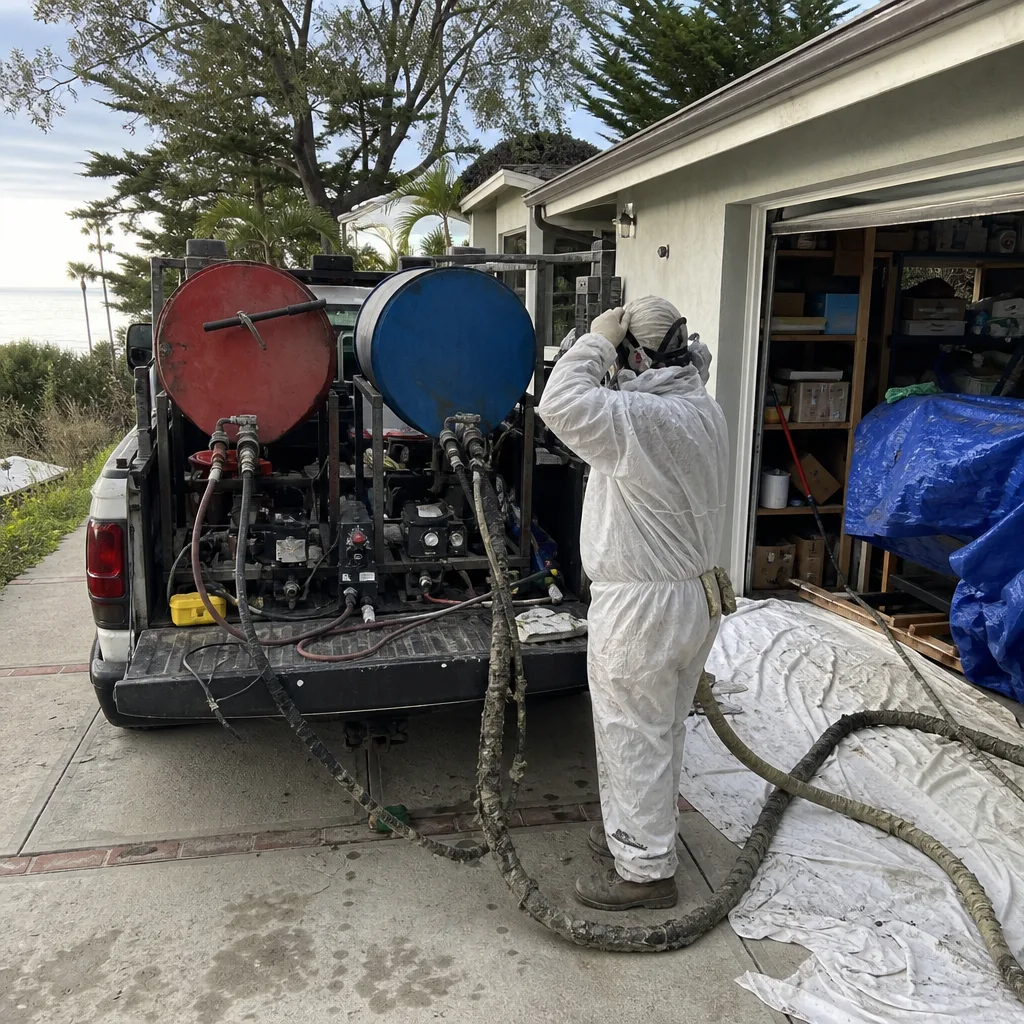
Spray foam earns its keep in Quail Valley when air sealing is the real problem. On canyon-edge lots, wind-driven dust gets into walls and attics through gaps that batts can’t address. Closed-cell foam also adds structural rigidity, which matters on older additions that were never properly framed or permitted. We carry Icynene and Demilec lines for open-cell and closed-cell applications, so the conversation starts with the home’s actual leakage profile rather than a brand pitch. See what foam can and can’t do for a foothill home here: Spray Foam Insulation in Quail Valley.
What happens when you call
- 1
A real person answersNo phone trees — you reach a local pro.
- 2
You get an upfront price rangeHonest numbers before anyone is dispatched.
- 3
A background-checked tech heads outLicensed & insured, dispatched right away.
- 4
You approve before work beginsNothing starts until you say go.
Blown In Insulation in Quail Valley
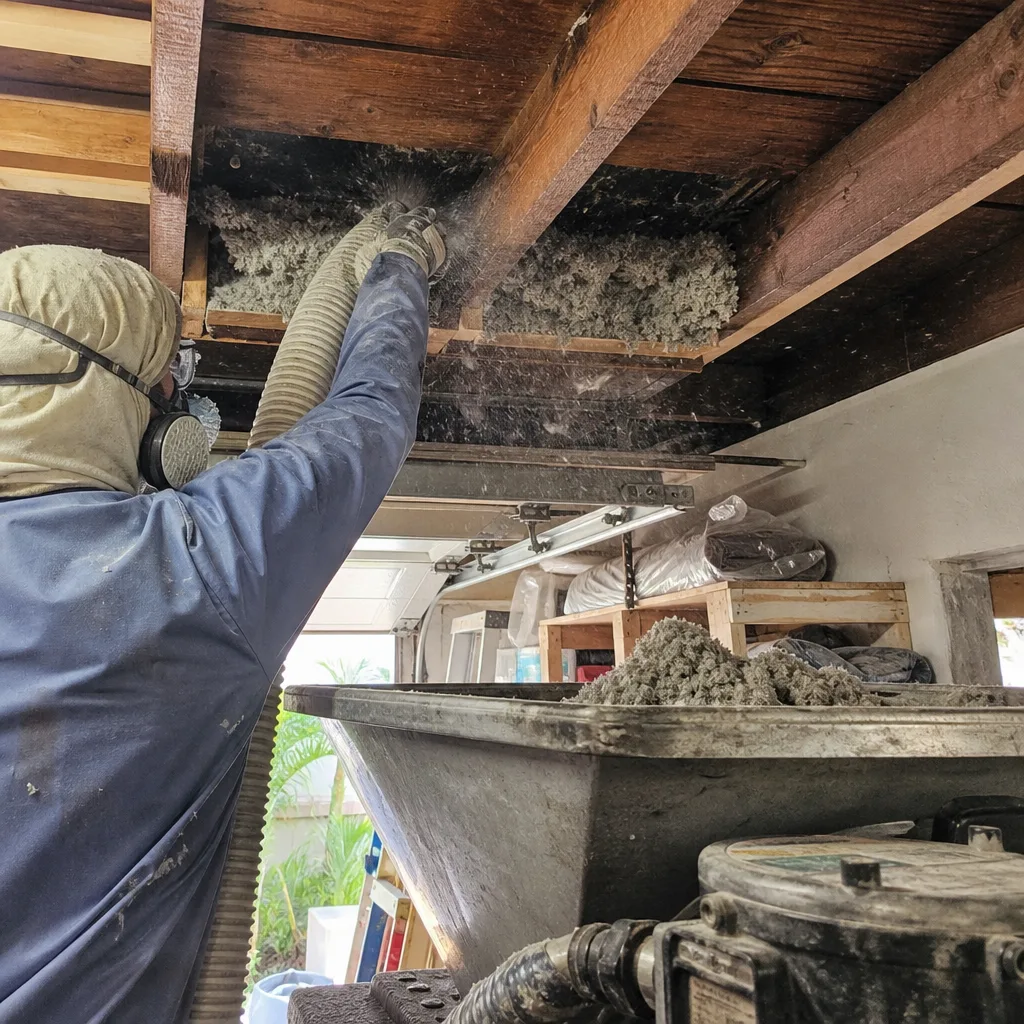
Blown in insulation is the most practical retrofit solution for Quail Valley’s older housing stock. Most of the homes we service in the 92587 ZIP were built with fiberglass batts that have settled and compressed over 30 to 50 years, leaving attics with effective R-values far below what the labels claim. Adding loose-fill material on top, or blowing dense-pack cellulose into existing wall cavities, restores thermal performance without the cost and disruption of gutting the home. That’s the core job here, and it pairs naturally with the air-sealing work these foothill houses need. For a deeper look at the method itself, see our full service page: Blown In Insulation.
Cellulose Insulation
Signs you need it
Rooms that heat up unevenly in summer, high cooling bills from an overworked AC, or visible settling in older attic batts all point to a cellulose retrofit.
What it costs in Quail Valley
Blown-in cellulose in Quail Valley typically runs $1.50 to $3.50 per square foot installed, depending on depth and whether we’re air-sealing first.
How we do it
We air-seal penetrations, install baffles and dams where needed, then blow GreenFiber cellulose to the specified R-value using calibrated equipment.
Blown In Attic Insulation
Signs you need it
If your attic insulation measures under 6 inches deep, or your upstairs rooms swing 10+ degrees from the thermostat setting, the attic is the first place to look.
What it costs in Quail Valley
Full blown-in attic insulation for a typical Quail Valley single-story runs $1,800 to $4,500 depending on square footage, existing material, and target R-value.
How we do it
We remove or top-dress existing material as needed, seal penetrations and top plates, then blow loose-fill to R-38 or R-49 across the entire attic floor.
What Blown In Insulation Costs in Quail Valley
| Item | Typical range in Quail Valley |
|---|---|
| Blown-in fiberglass (attic, R-38) | $1,200 – $3,400 |
| Blown-in cellulose (attic, R-38) | $1,500 – $4,500 |
| Dense-pack cellulose (existing walls) | $2.50 – $4.50 per sq ft |
Is blown-in insulation worth it for a Quail Valley home?
Yes, especially for 1970s and 1980s houses still running original R-11 to R-19 batts. Upgrading to R-38 or R-49 cuts cooling costs measurably and evens out room temperatures year-round. Call (855) 341-3373 for a Quail Valley-specific estimate.
How long does blown-in insulation last in a foothill climate?
Cellulose and blown fiberglass hold their performance for 20 to 30 years when properly installed and kept dry, but settling and dust infiltration on hillside lots can shorten that. We can inspect and top-dress aging material. Call us for a free attic check.
Brands We Service in Quail Valley
We carry GreenFiber cellulose, Owens Corning and Johns Manville fiberglass, and Knauf batts for Quail Valley projects. Common materials are stocked locally, which keeps most retrofits on schedule. See the full lineup on our brands page.
Pricing for Insulation Company in Quail Valley, CA
| Service | Typical range in Quail Valley |
|---|---|
| Blown-in fiberglass (attic, R-38) | $1,200 – $3,400 |
| Blown-in cellulose (attic, R-38) | $1,500 – $4,500 |
| Dense-pack cellulose (existing walls) | $2.50 – $4.50 per sq ft |
| Blown-in fiberglass (walls, dense-pack) | $2.00 – $3.50 per sq ft |
| Attic air sealing (penetrations and top plates) | $600 – $1,800 |
| Attic insulation removal (old batts or vermiculite) | $1.00 – $2.50 per sq ft |
| Spray foam, open-cell (attic roofline) | $2.50 – $5.50 per sq ft |
| Spray foam, closed-cell (attic roofline or crawlspace) | $3.50 – $7.50 per sq ft |
| Radiant barrier (attic rafters) | $1.00 – $2.50 per sq ft |
Costs in Quail Valley run higher on hillside lots where access is tight and we’re sealing significant air leaks before adding insulation. Every project gets a written, line-item estimate before work starts, and that number is what you pay unless you change the scope.
Neighborhoods We Serve in Quail Valley
We work throughout the 92587 ZIP, from the flat streets near Canyon Lake to the hillside and canyon-edge lots that make up the eastern half of the community. Typical response time for a Quail Valley estimate is 1 to 3 business days, and we schedule installations around the summer heat when possible.
- Canyon Lake-adjacent foothills
- Goetz Road corridor
- Hillside lots east of the lake
- Manufactured home communities near Quail Valley Drive
- Semi-rural acreage properties
Service Area – Cities Near Quail Valley
Shelter Insulation serves Quail Valley and the surrounding inland Riverside County communities. We regularly work in Sun City, CA, Canyon Lake, CA, Meadowbrook, CA, and Romoland, CA, and we’re familiar with the shared housing stock and climate patterns across this part of the foothills.
Serving Quail Valley, CA — Our Local Coverage Area
We’re based in the Quail Valley area and know this community well. Use the map below to see our service coverage — if you’re nearby, we can almost certainly help.
FAQs About Insulation Company in Quail Valley
Most Quail Valley estimates happen within 1 to 3 business days, and installation is typically scheduled within 2 to 4 weeks depending on the season. Emergency attic work after a leak or pest infestation can often be prioritized. Call (855) 341-3373 to check current scheduling.
Standard attic and blown-in insulation retrofits in Riverside County generally don’t require a permit, but spray foam on the roofline can trigger a review in some cases. We handle the paperwork when it’s needed and will tell you upfront what applies to your specific project.
Yes. Manufactured and mobile homes on semi-rural lots make up a large share of Quail Valley’s housing, and blown-in insulation works well in their shallow cavities and underbelly spaces. We’ll assess what’s already there and recommend the right material and depth for the home.
What happens when you call
- 1A real person answersNo phone trees — talk to a local insulation pro.
- 2You get an upfront price rangeHonest numbers before anyone is dispatched. No surprises.
- 3A background-checked tech heads outLicensed & insured, typically within 30–60 min.
- 4You approve before work beginsNothing starts until you say go.
What Quail Valley Customers Say
"Handled the utility rebate paperwork, which knocked a real amount off the final cost."
— Hector Ramirez"Installed baffles at the soffits so the new insulation didn't block the ventilation, which the previous contractor apparently never considered."
— Eric Fletcher"Spray foam in the rim joists in the basement. The cold floors above them are gone."
— Karen Nguyen