
Insulation Company in San Joaquin Hills, CA
Blown in insulation is the retrofit workhorse for San Joaquin Hills homes, and it’s where most of our conversations with homeowners on this side of Newport Coast Drive begin. The housing stock here, mostly large 1980s to 2000s Mediterranean builds, typically has original attic insulation that’s settled, been pushed aside by HVAC work, or falls short of what Title 24 now expects. Combined with canyon terrain that bakes west-facing tile roofs through every summer afternoon, the result is exactly what you’d predict: upstairs rooms that won’t hold a temperature and cooling bills that climb every July. Call us at (855) 341-3373 when you’re ready to do something about it.
Why San Joaquin Hills Homes Are Different
San Joaquin Hills sits on steep canyon terrain, and that topography shapes the insulation conversation more than most homeowners realize. The lots are cut into hillsides, which means many attics have limited access points and roof pitches that make working conditions genuinely tight. Tile roofs absorb intense afternoon solar gain, particularly on the west-facing exposures overlooking the canyons. That heat doesn’t just warm the attic air; it bakes insulation from above year after year, degrading its effectiveness well before the material would fail in a milder climate.
The homes themselves create the second layer of challenge. We’re mostly talking about 3,000 to 6,000-plus square foot two-story stucco builds with vaulted ceilings, bonus rooms, and multi-zone HVAC systems. Those are beautiful homes, but vaulted ceilings leave less attic cavity to work with, and multi-zone systems mean more ducts running through unconditioned attic space. Every duct run is a place where original batt insulation got shifted during a past retrofit and was never put back. Add the wildland-urban interface factor, where ember intrusion through attic vents is a real concern, and you start to see why insulation work in San Joaquin Hills rewards someone who actually studies the house before recommending a material.
Our Main San Joaquin Hills Services
Most San Joaquin Hills homeowners reach out to us for one of two reasons: they’re roasting upstairs during the summer, or they want to seal the attic properly and are weighing their insulation options. Here’s how each one applies to this specific area.
Attic Insulation in San Joaquin Hills
Attic insulation here usually means going up against old, settled R-19 batts in a tight canyon-side attic. We assess what’s there, check for displaced material around duct runs, and build the solution around the home’s actual roof geometry and sun exposure. On west-facing lots above the canyons, the right attic insulation can change the entire feel of the second floor. We’ll walk through your options honestly, fiberglass, cellulose, or mineral wool, and explain what each one does in a San Joaquin Hills attic. Attic Insulation in San Joaquin Hills covers the full scope.
Spray Foam Insulation in San Joaquin Hills
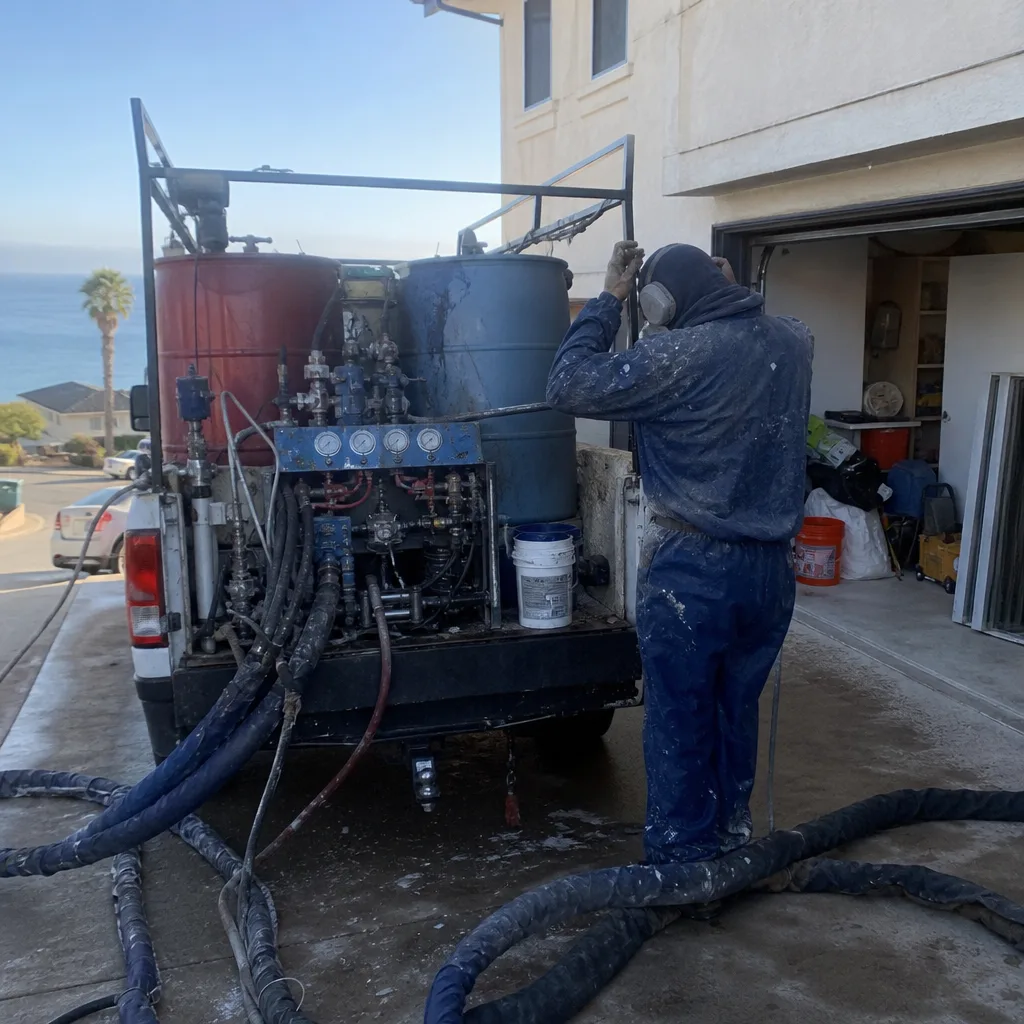
For homeowners who want to address air sealing as much as thermal resistance, spray foam is the conversation starter. The canyon-side tracts off Newport Coast Drive have attics with irregular geometry, roof penetrations, and the kind of gaps that let hot air move freely between the attic and living spaces. Closed-cell foam handles that in one pass, and we’re authorized installers for Demilec and Icynene, two of the brands spec’d most often in high-performance envelopes. For the full breakdown on San Joaquin Hills applications, see Spray Foam Insulation in San Joaquin Hills.
What happens when you call
- 1
A real person answersNo phone trees — you reach a local pro.
- 2
You get an upfront price rangeHonest numbers before anyone is dispatched.
- 3
A background-checked tech heads outLicensed & insured, dispatched right away.
- 4
You approve before work beginsNothing starts until you say go.
Blown In Insulation in San Joaquin Hills
Blown in insulation is the fastest way to restore thermal performance to a San Joaquin Hills attic that’s still running on its original, now-settled material. The canyon-side tracts off Newport Coast Drive share a common story: original R-19 batts have compressed, gotten shoved aside during HVAC retrofits, or simply never covered the full attic floor in the first place. Blown-in material, whether cellulose or fiberglass, reaches into the uneven cavities and tight corners that batts leave bare, creating a continuous thermal layer across the whole attic floor. That’s why we carry GreenFiber cellulose and Owens Corning loose-fill fiberglass, and why we recommend blown-in for most retrofit attics in this area. For a deeper look at the method itself, see our Blown In Insulation service page.
Cellulose Insulation
Signs you need it
Your attic has patchy or settled insulation, and your upstairs rooms swing from hot to cold, even when the HVAC is running.
What it costs in San Joaquin Hills
Cellulose blown into an existing attic in San Joaquin Hills typically runs $1.50 to $2.30 per square foot, including labor and material.
How we do it
We vent-seal leaks, install depth markers, and blow GreenFiber cellulose to the target R-value, leaving a clean, uniform blanket across the attic floor.
Blown In Attic Insulation
Signs you need it
Your home is from the 1980s or 1990s, and the original insulation sits below the tops of the joists or has gaps around ductwork.
What it costs in San Joaquin Hills
For a typical 2,000-square-foot attic floor in San Joaquin Hills, expect $1,500 to $3,400 total, depending on depth and prep work.
How we do it
We inspect the attic, seal any air bypasses, and use a high-output blowing machine to install insulation to a uniform, marked depth.
What Blown In Insulation Costs in San Joaquin Hills
| Item | Typical range in San Joaquin Hills |
|---|---|
| Blown in insulation (attic, basic retrofit) | $1,500 – $3,400 |
| Blown in insulation (per square foot) | $1.50 – $2.60 |
| Insulation removal (old material, per square foot) | $0.80 – $1.50 |
Is blown in insulation worth it for a San Joaquin Hills home?
Usually, yes. Most attics here are under-insulated by current standards, and blown-in material covers uneven cavities that batts leave bare. The cooling-season difference in upstairs rooms is typically noticeable within the first summer.
How long does blown in insulation last in the San Joaquin Hills climate?
Cellulose and loose-fill fiberglass both hold up for several decades in San Joaquin Hills. The bigger issue here is settlement and displacement from HVAC work, which is why we check depth and coverage before adding anything.
Brands We Service in San Joaquin Hills
We’re authorized to install products from Owens Corning, Johns Manville, and Demilec, and we stock the parts and materials for the systems most common in San Joaquin Hills homes. Sourcing is local through our Laguna Beach supply network, so lead times stay predictable.
Pricing for Insulation Company in San Joaquin Hills, CA
| Service | Typical range in San Joaquin Hills |
|---|---|
| Attic insulation (full attic, basic) | $1,500 – $3,400 |
| Blown in insulation (attic, basic retrofit) | $1,500 – $3,400 |
| Blown in insulation (per square foot) | $1.50 – $2.60 |
| Insulation removal (old material, per square foot) | $0.80 – $1.50 |
| Spray foam insulation (open-cell, per square foot) | $1.20 – $2.50 |
| Spray foam insulation (closed-cell, per square foot) | $2.50 – $5.00 |
| Air sealing (whole house, basic) | $1,000 – $3,000 |
| Vapor barrier (crawl space, per square foot) | $1.50 – $3.00 |
San Joaquin Hills pushes prices up when attics are tight or access is difficult, and when old material needs removal before new insulation goes in. You’ll get an upfront, line-item price before any work starts, so the number you approve is the number you pay.
Neighborhoods We Serve in San Joaquin Hills
We work throughout the canyon-side tracts and the newer master-planned sections of San Joaquin Hills, and we know which streets have the steepest driveway approaches and the tightest attic access. Response time across the area is typically same-week for estimates, with emergency attic work arranged case by case.
- Newport Coast Drive corridor
- Canyon-side tracts above San Joaquin Hills Road
- Pacific Ridge
- Ridge Park Road area
- Coastal Peak
Service Area – Cities Near San Joaquin Hills
Our crews run from Laguna Beach, and San Joaquin Hills sits right in the middle of our regular coverage. We also handle insulation work in Aliso Viejo, CA, Newport Beach, CA, Laguna Beach, CA, and Irvine, CA.
Serving San Joaquin Hills, CA — Our Local Coverage Area
We’re based in the San Joaquin Hills area and know this community well. Use the map below to see our service coverage — if you’re nearby, we can almost certainly help.
FAQs About Insulation Company in San Joaquin Hills
In most cases, no. Re-insulating an existing attic or adding blown-in material doesn’t trigger a permit in San Joaquin Hills. If your project involves structural changes, like converting a vented attic to an unvented assembly, we’ll check with the local building department before starting.
We schedule estimates in San Joaquin Hills within the same week in most cases. Installation timing depends on the project scope, but a standard attic re-insulation is usually completed in one day once we’re on site.
Yes. San Joaquin Hills HOAs often have rules about visible exterior changes, but interior insulation work almost never runs into issues. If your project touches anything visible from the street, like attic vents, we’ll coordinate with your HOA before we begin.
What happens when you call
- 1A real person answersNo phone trees — talk to a local insulation pro.
- 2You get an upfront price rangeHonest numbers before anyone is dispatched. No surprises.
- 3A background-checked tech heads outLicensed & insured, typically within 30–60 min.
- 4You approve before work beginsNothing starts until you say go.
What San Joaquin Hills Customers Say
"Told me the crawlspace didn't need doing and only the attic did. Half the job, half the money."
— Shane Novak"Handled the utility rebate paperwork, which knocked a real amount off the final cost."
— Hector Ramirez"Installed baffles at the soffits so the new insulation didn't block the ventilation, which the previous contractor apparently never considered."
— Eric Fletcher