
Insulation Company in March Air Force Base, CA
Blown in insulation solves the single most common problem we see in March Air Force Base homes: attic spaces that were under-insulated from the day they were built. Most of the housing stock here dates to the 1950s through 1970s, when base housing went up fast and energy codes were nearly nonexistent. That leaves homeowners fighting 100-degree summers and near-freezing winter nights with maybe R-11 in the attic, if that. Call Shelter Insulation at (855) 341-3373 and we’ll tell you exactly what’s up there and what it should be.
Why March Air Force Base Homes Are Different
March Air Force Base came up as a Strategic Air Command bomber base, and the residential streets around it were built to house personnel quickly. Wherry and Capehart-era tract homes dominate the 92551 ZIP, and they share a profile: single-story, wood-frame, minimal original insulation, and attic cavities designed around evaporative-cooling ductwork rather than modern HVAC systems. The enlisted quarters in particular have attic spaces that lack proper ridge venting, which creates a problem most neighboring cities never see.
The climate here makes insulation performance a bigger deal than it looks on paper. Summer days in the Inland Empire routinely cross 100°F while winter nights drop near freezing, so the attic becomes a heat sink by afternoon and a cold lid by morning. Dry air means blown-in fiberglass and cellulose both perform well, but dust from the March ARB flightline and surrounding agricultural fields gets pulled into attic spaces through poorly sealed penetrations. We check for that on every job, because a dusty attic is a sign of air movement, and air movement is what insulation is supposed to stop.
One more thing that sets March Air Force Base apart: the older enlisted housing has a documented history of attic moisture problems during the summer monsoon season. When insulation gets added without correcting venting, condensation forms and mold follows. Our crews know to look at the venting picture before the insulation goes in, which is the kind of local knowledge that only comes from working here.
Our Main March Air Force Base Services
Blown in insulation is the workhorse for most March Air Force Base homes, but two other services come up often enough that they have their own pages and their own crews scheduled around them.
Attic Insulation in March Air Force Base
Attic work in the 92551 ZIP usually means addressing whatever was installed decades ago, whether that’s compressed fiberglass batts in the officers’ quarters or thin loose-fill in the enlisted housing. Vaulted ceilings in some of the older officers’ homes complicate access, and we plan around that rather than treating every attic the same. If you’re seeing high summer bills or rooms that never hold temperature, the attic is the first place to look. Read more about Attic Insulation in March Air Force Base for the full scope.
Spray Foam Insulation in March Air Force Base
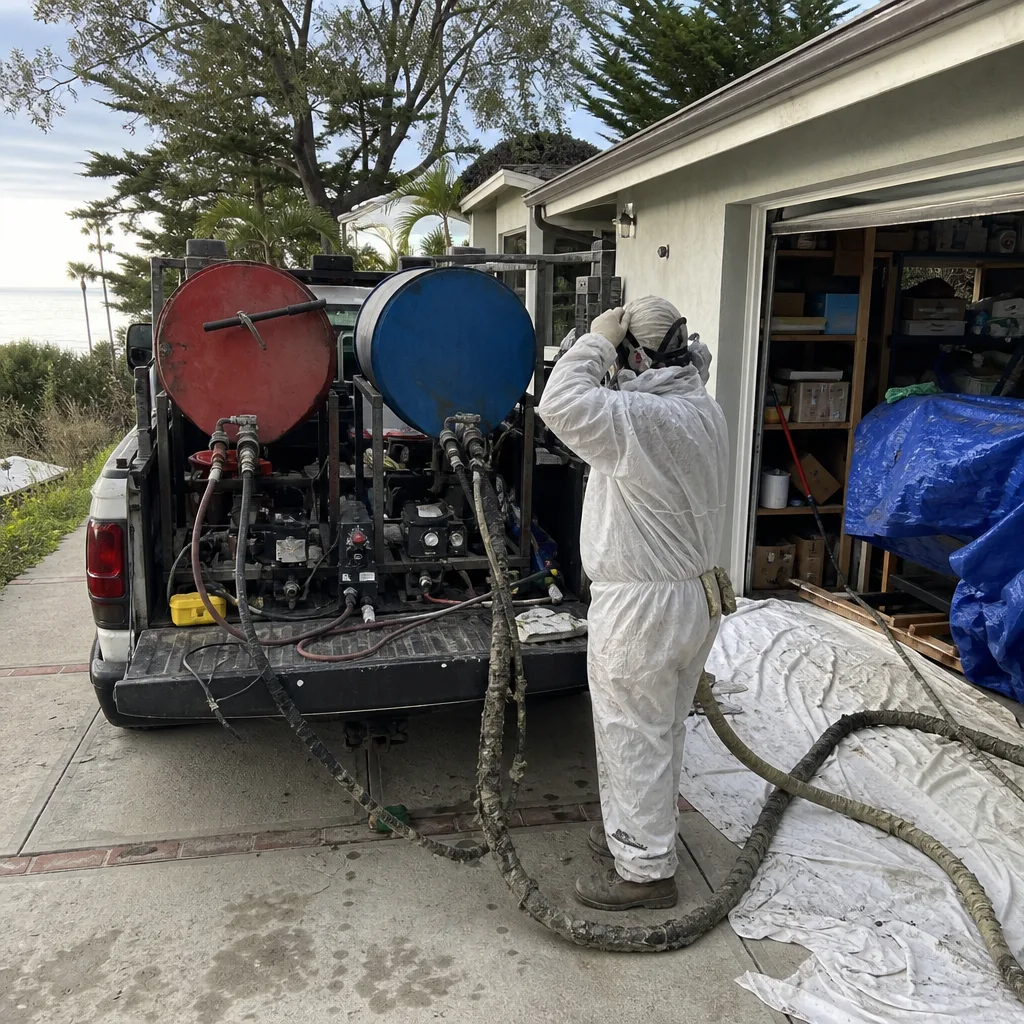
Spray foam earns its keep here when homeowners want to seal attics against the dust and draft patterns that come from living near an active airfield and farmland. Closed-cell foam adds structural value and blocks moisture, which matters in the older base housing where condensation has been a known issue. Open-cell foam handles the air-sealing side at a lower cost. We carry both Icynene and Demilec lines. See Spray Foam Insulation in March Air Force Base for details on closed-cell versus open-cell in this climate.
What happens when you call
- 1
A real person answersNo phone trees — you reach a local pro.
- 2
You get an upfront price rangeHonest numbers before anyone is dispatched.
- 3
A background-checked tech heads outLicensed & insured, dispatched right away.
- 4
You approve before work beginsNothing starts until you say go.
Blown In Insulation in March Air Force Base
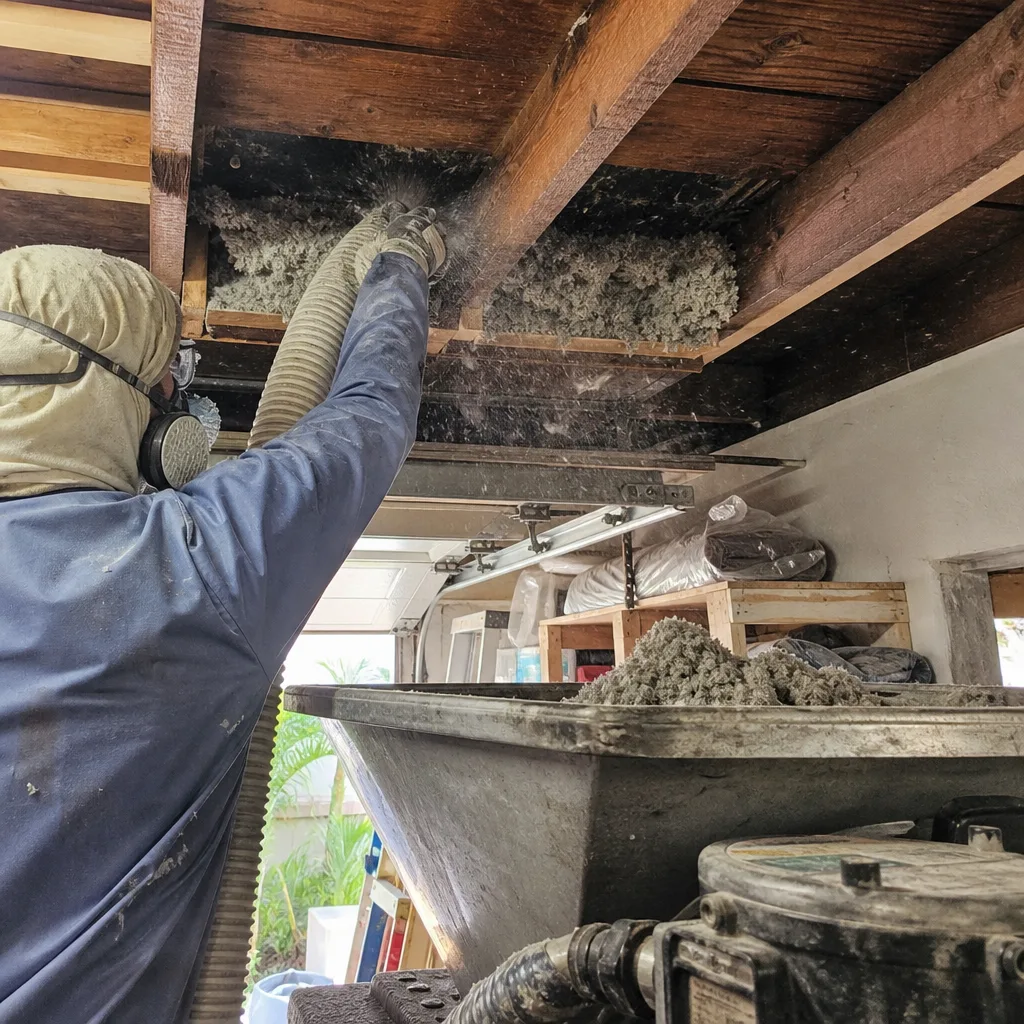
Blown in insulation in March Air Force Base is the most efficient retrofit for homes built between the 1950s and 1970s, because loose-fill material reaches every odd corner, shallow cavity, and irregular joist bay that batt insulation cannot. Most of the base’s tract housing was insulated to the minimum standard of its era, or never topped up after settling and compression took their toll. The result is hot ceilings in summer, cold rooms in winter, and utility bills that don’t match the square footage. We work with Blown In Insulation across the full material range, and for March Air Force Base specifically, we lean on cellulose and fiberglass loose-fill for the dry climate and frequent dust exposure.
Cellulose Insulation
Signs you need it
Your attic insulation sits below the top of the joists, or you can see bare drywall between old batts.
What it costs in March Air Force Base
Cellulose blow-in for a typical March Air Force Base attic runs $1,200 to $2,600 depending on depth and square footage.
How we do it
We seal penetrations, verify or add venting, then blow treated cellulose to the target R-value with a calibrated machine and a density check at the end.
Blown In Fiberglass Insulation
Signs you need it
Rooms on the top floor run 8 to 12 degrees warmer than the rest of the house during summer afternoons.
What it costs in March Air Force Base
Blown-in fiberglass in this area typically lands between $1,000 and $2,400 for a standard attic.
How we do it
We remove any compromised material, air-seal the attic floor, and blow fiberglass to a consistent depth measured in multiple locations.
What Blown In Insulation Costs in March Air Force Base
| Item | Typical range in March Air Force Base |
|---|---|
| Blown-in fiberglass (attic, standard home) | $1,000 – $2,400 |
| Blown-in cellulose (attic, standard home) | $1,200 – $2,600 |
| Loose-fill top-up over existing insulation | $500 – $1,500 |
Is blown in insulation worth it in March Air Force Base?
Yes, for most homes here it pays back fastest of any insulation method. Attics in 1950s-70s base housing lose heat through the ceiling year-round, and topping up loose-fill stops that loss directly. Call (855) 341-3373 for a free attic assessment.
Can you blow insulation into existing walls here?
We can, but on the base’s older wood-frame tract homes we usually recommend attic work first, because ceilings are the largest heat-loss surface. Wall retrofits come second. Call (855) 341-3373 and we’ll explain when wall work makes sense.
Brands We Service in March Air Force Base
Our March Air Force Base jobs draw from the same brand pool as every Shelter Insulation project: Owens Corning fiberglass, GreenFiber cellulose, and the Icynene plus Demilec spray foam lines when air-sealing is the priority. We stock common materials locally and special-order the rest, so most projects start within a week. See our brands for the full lineup.
Pricing for Insulation Company in March Air Force Base, CA
| Service | Typical range in March Air Force Base |
|---|---|
| Blown-in fiberglass (attic) | $1,000 – $2,400 |
| Blown-in cellulose (attic) | $1,200 – $2,600 |
| Loose-fill top-up | $500 – $1,500 |
| Attic insulation (batt replacement) | $1,500 – $3,500 |
| Open-cell spray foam (attic) | $2,500 – $6,000 |
| Closed-cell spray foam (attic) | $4,000 – $9,000 |
Prices in March Air Force Base shift with access and attic geometry. Vaulted ceilings in some officers’ quarters add labor, and attics that still carry old evaporative-cooler ductwork often need that removed before insulation goes in. Every quote is line-item and fixed before work starts, so the number we give you is the number you pay.
Neighborhoods We Serve in March Air Force Base
We work throughout the 92551 ZIP and the surrounding March corridor. Our crews know the base’s housing clusters well enough to recognize the attic layout before they open a hatch.
- March Air Force Base enlisted housing
- Officers’ quarters (vaulted ceiling homes)
- Capehart and Wherry tract neighborhoods
- Homes along the March corridor between Riverside and Perris
- Civilian-owned rentals converted after base realignment
Most March Air Force Base appointments are scheduled within three to five business days, and attics under 2,000 square feet are usually finished in a single day.
Service Area – Cities Near March Air Force Base
We take jobs in March Air Force Base and the surrounding communities, including Woodcrest, CA, Perris, CA, Good Hope, CA, and Mead Valley, CA. If you’re not sure whether you’re in range, call (855) 341-3373 and we’ll confirm.
Serving March Air Force Base, CA — Our Local Coverage Area
We’re based in the March Air Force Base area and know this community well. Use the map below to see our service coverage — if you’re nearby, we can almost certainly help.
FAQs About Insulation Company in March Air Force Base
Most estimates happen within two business days, and installation follows within the same week or the next depending on material availability. Attic jobs in the 92551 ZIP are typically single-day projects. Call (855) 341-3373 to schedule.
For civilian-owned homes, standard insulation retrofits rarely need permits. If you’re in a rental or still under base housing authority, check with your housing office first. We can provide a scope-of-work document for any approval process.
Yes. We inspect venting before adding insulation to any March Air Force Base attic, especially in the older enlisted quarters where condensation has been a known problem. Air-sealing and dust control are part of every quote we write for this area.
If your March Air Force Base home fights the Inland Empire heat every summer and chills you out every winter, the fix is usually in the attic. Call Shelter Insulation at (855) 341-3373 for a free estimate and an honest read on what your house actually needs.
What happens when you call
- 1A real person answersNo phone trees — talk to a local insulation pro.
- 2You get an upfront price rangeHonest numbers before anyone is dispatched. No surprises.
- 3A background-checked tech heads outLicensed & insured, typically within 30–60 min.
- 4You approve before work beginsNothing starts until you say go.
What March Air Force Base Customers Say
"Told me the crawlspace didn't need doing and only the attic did. Half the job, half the money."
— Shane Novak"Handled the utility rebate paperwork, which knocked a real amount off the final cost."
— Hector Ramirez"Installed baffles at the soffits so the new insulation didn't block the ventilation, which the previous contractor apparently never considered."
— Eric Fletcher