
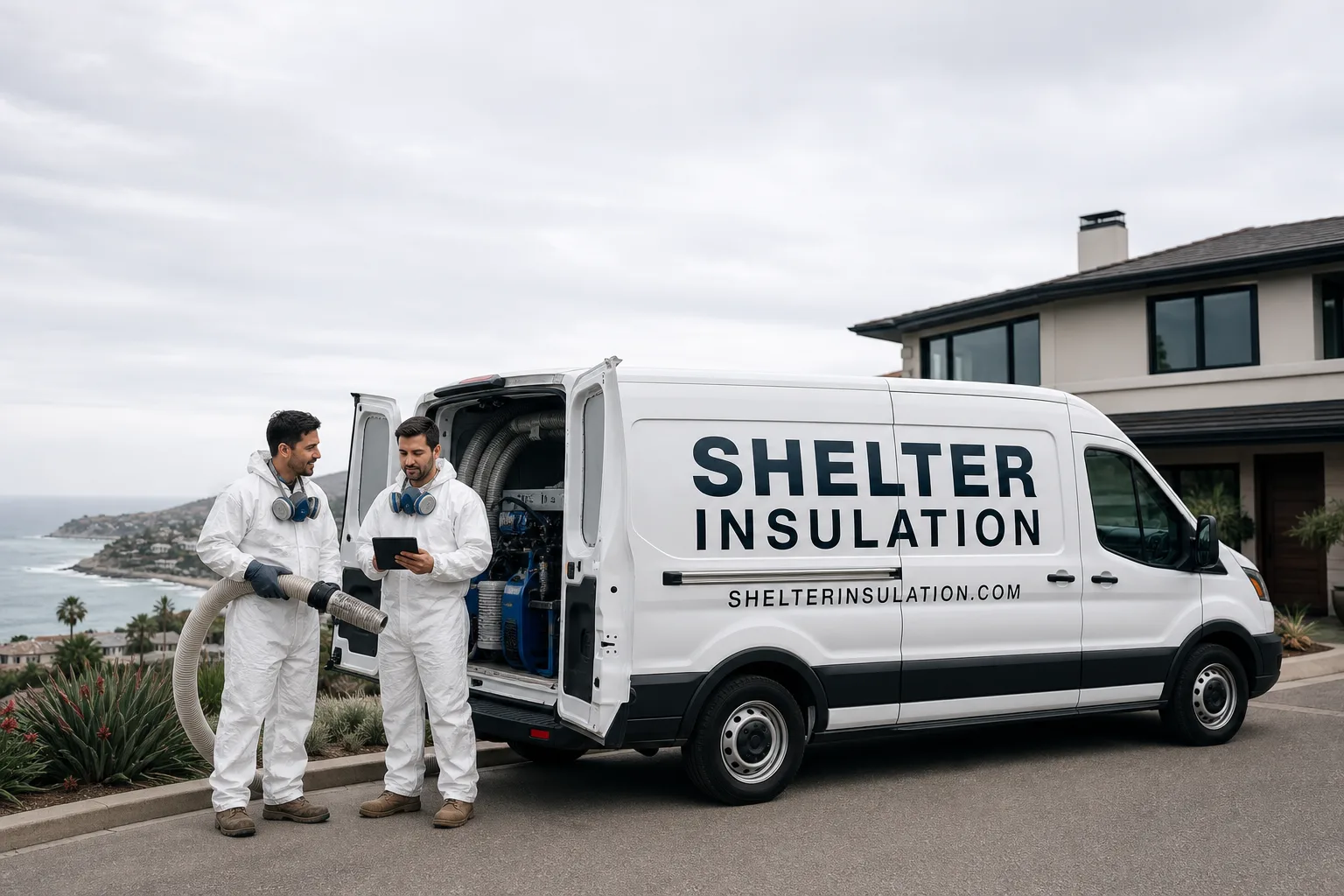
Fast, Reliable Attic Insulation Across Artesia
Attic insulation in Artesia is rarely about the heat, even though summers get brutal here. It’s about moisture rising from the ground under your home and wrecking whatever sits in the attic above it. Our crews work in 90701 and 90702 every week, and we’ve learned that the right fix for most Artesia homes starts below the attic, in the crawlspace, before we ever touch the attic floor. Same-week response is the norm, and free estimates are standard. Call (855) 341-3373 and we’ll come look at what’s actually happening in your home.
Why Shelter Insulation Is Artesia’s Preferred Attic Insulation Company
We’re not a one-product contractor trying to sell you whatever is on the truck. Shelter Insulation carries eight manufacturer brands because different Artesia homes need different materials, and forcing fiberglass into a moisture-prone crawlspace edge just means replacing it again in five years. Homeowners in Artesia keep calling us back because we tell them when a job doesn’t need the expensive solution they read about online. Sometimes the right answer is a $400 vapor barrier and half the insulation they expected to buy.
Alan Brecker, who leads our crews, started working these LA Basin neighborhoods long enough to know that a 1958 stucco tract home off Pioneer Boulevard has different problems than a newer build in Cerritos. The ground under Artesia holds water from the old dairy days, and that fact shapes every attic insulation recommendation we make here. We’re state-licensed and insured & bonded, and we handle everything from initial inspection to final decking ventilation check.
Insulation Contractors in Artesia
Insulation Contractors in Artesia need to read the ground before they read the attic. The job here usually starts in a dark, damp crawlspace where a torn or missing vapor barrier has been letting natural ground moisture rise into the home for decades. In a typical Artesia attic, we find compressed fiberglass batts stained brown along the bottom edge, sheetrock discoloration near the wall plates, and decking that feels damp even in August. The fix is rarely just adding more insulation on top of what’s already there. In fact, adding R-value over moisture-damaged material makes the problem worse.
Crawlspace Vapor Barrier First
Before any attic insulation goes in, our Attic Insulation team checks what’s happening at the lowest point of the home. A sealed vapor barrier over the damp dairy-era soil changes how the whole house breathes. If you skip this step in Artesia, the new batts start soaking up moisture within the first rainy season.
Top-Up vs. Full Replacement
Some Artesia attics still have clean, dry insulation from the 1980s or later and just need a top-up to hit modern R-value. But on 1950s and 1960s homes with original batts, we almost always recommend full removal and replacement. The material has been sitting above a damp crawlspace for sixty years; it’s not insulating anymore. A full replacement on a 1,200-square-foot Artesia home typically runs $1,800 to $3,200, while a top-up over verified dry insulation costs $900 to $1,600.
Attic Ventilation in Artesia
Attic Ventilation in Artesia works differently than in dry inland cities. Marine-layer humidity that settles into the LA Basin during winter mornings gets pulled into attic spaces and trapped without airflow, which is why we see so much condensation staining around the roof decking even though actual rain is rare. Older Artesia homes often have undersized gable vents or soffit vents that were blocked off decades ago, and the result is an attic that steams itself every winter morning. Adding soffit-to-ridge ventilation is often the difference between insulation that lasts twenty years and insulation that fails in six.
Baffles and Soffit Airflow
On many Artesia track homes, blown-in material from a previous contractor has been pushed right up against the roof edge, blocking the soffits entirely. We install baffles first so air moves from the eave upward along the decking. It’s a small piece that most homeowners never see, but without it the ventilation design doesn’t work, and the decking stays wet.
Decking Drying After Moisture
Once we’ve cut the ground-moisture source with a new vapor barrier, the attic air itself has to finish the job. That means making sure air moves through the attic at a steady low volume. Roof decking in Artesia takes longer to dry than people expect because the ambient humidity sits high for half the year, even when outside temperatures are warm. We account for that in the ventilation plan rather than pretending it doesn’t apply.
Trusted Brands We Service in Artesia
We carry Johns Manville batts for standard Artesia attic replacements because the shallow bays on 1950s stucco homes don’t fit every product off the shelf. We carry Owens Corning for homeowners who want a familiar name with verified performance ratings. And for homes with close neighbors and traffic noise from Artesia Boulevard, we’ll sometimes recommend Rockwool for the added sound absorption, not just thermal performance. If the home needs air-sealing before insulation, we install Icynene and Demilec spray foam where the framing meets exterior walls. Local inventory keeps turnaround short for Artesia customers, and we quote the material by name in every written estimate.
Common Attic Insulation Problems We See in Artesia Homes
- Compressed, moisture-stained batts blamed on heat when the real cause is below. The old dairy water table under 90701 keeps crawlspace soil damp year-round. Without a vapor barrier, that moisture rises through the framing and into the attic insulation, staining it brown along the bottom edge. Homeowners mistake the failure for summer heat damage, but the pattern is unmistakable once you look.
- Missing or torn crawlspace vapor barriers. Home built in 1962? The original plastic, if there ever was any, is shredded. Artesia’s fine, water-retentive soils hold moisture at the surface. Without a sealed barrier, the home breathes ground moisture 24 hours a day, and the attic decking is the first surface to show it.
- Blocked or non-existent soffit ventilation. Many Artesia attics have soffit vents that were painted over during a stucco recoat or blocked by decades of blown-in material. The attic turns into an oven during summer afternoons and a steam room during winter mornings.
- Decking rot near the crawlspace-adjacent wall plate. The attic board closest to the perimeter walls absorbs the most rising moisture and is often the first piece to show fungal staining or softness. We check this during every Artesia inspection because it tells us whether the problem is active or historical.
Pricing for Attic Insulation in Artesia, CA
Attic insulation in Artesia runs $900 to $3,200 for most single-story homes, depending on whether we’re topping up existing material or ripping out 60-year-old batts and starting over. The low end covers a top-up over verified dry insulation. The high end includes full removal, crawlspace vapor barrier installation, new batts sized to the home’s existing framing, and soffit-to-ridge ventilation work. Spray foam projects for Artesia homes start around $2,800 and go up from there based on square footage and access. Blown-in cellulose in an open attic here typically runs $1,200 to $2,000. Every estimate is free, and the number we quote is the number you’ll pay. Call (855) 341-3373 to get yours.
We Also Serve Cities Near Artesia
Our crews work across the LA Basin corridor from Artesia into Cerritos, La Palma, Hawaiian Gardens, and Norwalk. Most jobs within this radius are scheduled the same week we inspect. For Artesia homeowners especially, the moisture profile of the old dairy land means we quote vapor barrier work as a standard part of the job, not an add-on. Call (855) 341-3373 to reach the team directly.
Serving Artesia, CA — Our Local Coverage Area
We’re based in the Artesia area and know this community well. Use the map below to see our service coverage — if you’re nearby, we can almost certainly help.
FAQs About Attic Insulation in Artesia
Your attic insulation is damp because ground moisture is rising through your crawlspace, not because of anything happening in the attic. Artesia sits on old artesian-well dairy land with a high water table, and in 90701 the soil under your home stays wet. That moisture wicks up through the framing, collects in the attic, and soaks into whatever insulation sits there. The fix starts with sealing a vapor barrier across the crawlspace floor, not with adding more insulation upstairs. Call (855) 341-3373 and we’ll verify whether this is what’s happening at your property.
Yes. In Artesia, the vapor barrier in the crawlspace matters more than adding attic R-value because the ground moisture is the actual failure mechanism. Adding R-value over damp insulation makes the problem worse, not better. We’ve fixed attics in this city where the homeowner had already paid for a full blow-in, and the new material was ruined within two years because the crawlspace was never addressed. Fix the moisture source first, then think about R-value. Estimates are free, so call (855) 341-3373 for an honest assessment.
For a 1950s stucco tract home with a low crawlspace in Artesia, we typically install Johns Manville batts sized to the original shallow bays after the crawlspace vapor barrier is sealed. Those old homes have framing that doesn’t match modern batt widths, and oversized material gets compressed during installation, robbing it of R-value. The low crawlspace has to be addressed first since it’s the moisture source. We then add baffles and verify soffit-to-ridge airflow so the new material stays dry. Call (855) 341-3373 for a site-specific quote.
Artesia’s marine-layer humidity makes attic ventilation more important here than in dry inland cities because morning condensation forms on the underside of the roof decking and never fully dries without steady airflow. Homes with blocked soffit vents or undersized gable vents trap that moisture, and it migrates into the insulation and decking. We design ventilation for the humidity pattern, not just the summer heat, which is why a soffit-to-ridge setup works better here than a single gable fan. Call (855) 341-3373 and we’ll inspect yours.
Yes. Heat failure tends to compress and darken insulation uniformly across the top layer, usually from years of high attic temperatures. Ground moisture failure shows up as brown staining concentrated along the bottom edge of the batts, soft decking near the perimeter walls, and rust on the fastener heads holding the framing together. If you have the moisture pattern, the attic was never the source of the problem. Alan Brecker checks for exactly this during every Artesia inspection. Call (855) 341-3373 to schedule yours.
Written by Alan Brecker, Owner at Shelter Insulation, serving Artesia and the surrounding LA Basin for over a decade.