
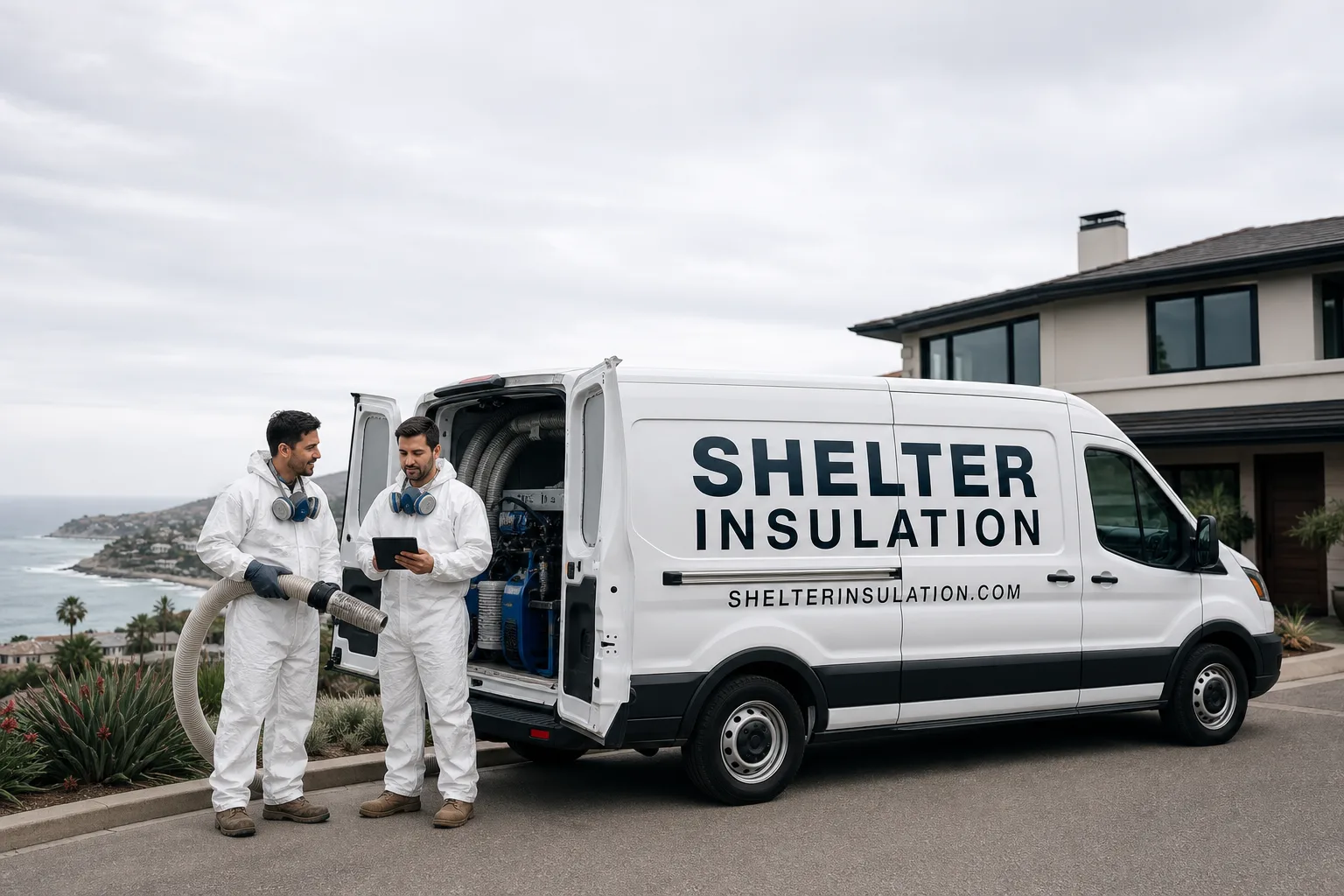
Fast, Reliable Attic Insulation Across South Gate
Attic insulation in South Gate is a retrofit job far more often than it’s new construction. Most homes here were built between the 1920s and 1950s, and many still have the original insulation, or none at all in the wall cavities. What that means for you is an attic that bakes under inland sun, rooms that never quite cool down in August, and energy bills that climb every summer. Our crews know South Gate’s housing stock because we’ve worked in it, from the stucco bungalows off Firestone Boulevard to the tight tract homes near South Gate Park. If your attic isn’t doing its job, call us at (855) 341-3373 for a free estimate.
Why Shelter Insulation Is South Gate’s Preferred Attic Insulation Company
South Gate homeowners tend to ask sharper questions than most. Decades of living with original plaster, aging wiring, and summers that push 90°F for weeks at a stretch will do that. We don’t show up with a single product and a script. We carry fiberglass, mineral wool, open- and closed-cell spray foam, and cellulose because your 1948 bungalow near Hollydale needs something different from a 1990s tract home off Atlantic Avenue. That’s the whole point of carrying eight brands, including Owens Corning, Johns Manville, Knauf, and GreenFiber. The right material for your home’s specific challenge, not whichever batt happens to be on the truck.
Alan Brecker built Shelter Insulation around a simple idea: one crew, every insulation need. When we handle your attic, we’re the same team that can address spray foam or blown-in work elsewhere in the house. One point of contact, one warranty conversation. For South Gate homeowners juggling work, kids, and an aging house, that single-contractor accountability matters. We’re not handing your attic off to a subcontractor we met last week.
Attic Ventilation in South Gate
Attic ventilation in South Gate is the difference between an attic that stays under 120°F and one that hits 150°F or higher by mid-afternoon in July. The dense, close-set rooflines in this city block cross-ventilation in ways you won’t see in newer suburbs. Many post-war tract homes here have soffits that were never screened or never cut for intake at all, and ridge vents that are more decorative than functional. When attic air can’t move, the insulation you paid for degrades faster, shingles cook from underneath, and the rooms below never fully shed the heat.
Soffit Intake and Baffle Restoration
In South Gate’s older homes, we routinely find soffits painted over, insulated over, or simply never opened. We install baffles to keep insulation from blocking airflow and cut proper intake where none exists. This restores the stack effect that pulls hot air out through whatever exhaust path the roof has.
Exhaust Path Correction
Attics in this city often have bathrooms venting directly into the attic space, pumping moisture into already-hot air. We correct those terminations and, where the roof allows, add or enlarge exhaust ventilation. Hot, dry summers plus trapped moisture makes for insulation that settles and loses R-value years before it should.
Radiant Barrier in South Gate
Radiant barrier in South Gate works as a heat reflector installed under the roofline, and it’s one of the most cost-effective upgrades for this specific climate. When the sun beats on a dark composition roof over a dense block of houses, the roof deck radiates heat straight down into whatever is below it. A properly installed radiant barrier reflects much of that heat before it ever reaches your insulation. That’s why we recommend it so often here: it addresses South Gate’s core problem, which is heat gain, not heat loss.
Reflective Foil Done Correctly
We’ve pulled failed radiant barrier out of South Gate attics where the foil was stapled tight against the roof deck with no air gap and no intake baffles. That configuration traps heat instead of reflecting it, especially when neighboring roofs block any hope of cross-ventilation. Radiant barrier needs an air space to work. It also needs ventilation functioning first. We install it as part of a system, never as an isolated shortcut.
Pairing Barrier With Insulation Depth
A radiant barrier alone won’t fix an under-insulated attic, and more insulation alone won’t stop radiant heat gain. In South Gate we usually recommend the barrier for the roofline and a loose-fill like GreenFiber cellulose for the attic floor. Blown-in reaches where batts can’t, filling the irregular cavities and tight corners that older framing always has. The combination knocks down both the radiant load and the conductive load, which is what actually moves the needle on summer comfort.
Trusted Brands We Service in South Gate
We carry Owens Corning and Johns Manville for fiberglass batt and blown-in work, Knauf for mineral wool where fire resistance or acoustics matter, and GreenFiber for cellulose retrofits in tight older attics. We carry GreenFiber because it’s the practical choice for South Gate’s housing: it flows into irregular cavities, it’s dense enough to resist settling, and it performs well in heat. We keep materials staged for quick turnaround on the 90280 zip code, and we don’t ask homeowners to wait on product that has to ship from somewhere else. When your attic needs work, we arrive with what the job requires.
Common Attic Insulation Problems We See in South Gate Homes
- Crushed batts from cramped closet-hatch access: South Gate attics often open through a small hatch in a closet ceiling, not a pull-down stair. Every time someone squeezes through, batts get compressed and shoved aside. Compressed fiberglass loses most of its R-value, leaving bare hot spots across the attic floor.
- Knob-and-tube wiring under new insulation: Many 1920s to 1950s bungalows here still have original knob-and-tube circuits. Burying them under new insulation creates an overheating hazard. Our process includes identifying that wiring, recommending re-routing or leaving a clearance path, and proceeding from there.
- Blocked soffit intake and zero exhaust path: The close-packed rooflines in this city mean attics that were never built to breathe. Insulation pushed tight against the roofline soffit blocks what little intake exists, and attic temperatures climb past 150°F. That heat cooks insulation, shortens shingle life, and radiates into the living space below.
- Foiled radiant barrier installed wrong: We see reflective foil stapled directly to the roof sheathing with no air gap. Without that air space, and without soffit intake, the barrier traps heat instead of reflecting it. It’s a common fix-and-flip shortcut that does more harm than good.
Pricing for Attic Insulation in South Gate, CA
Attic insulation top-up in South Gate typically runs $1.50 to $3.50 per square foot, depending on existing depth and target R-value. Full attic insulation replacement for a standard 900 to 1,200 square foot bungalow generally lands between $2,200 and $4,800. Radiant barrier installation adds roughly $1.25 to $2.50 per square foot, and attic ventilation correction, including baffles and soffit intake work, usually falls between $400 and $1,200 depending on access and what’s already in place. Older South Gate homes with knob-and-tube wiring or bad access can push toward the upper end. We give exact numbers after we see the attic, not before. Call (855) 341-3373 for a free estimate, and we’ll walk the space with you.
We Also Serve Cities Near South Gate
Our crews work throughout the Gateway Cities region. If you’re in South Gate or just across the city line in Lynwood, Bell, Cudahy, or Willowbrook, the same team handles the job. Same pricing structure, same brands, same accountability. The Attic Insulation work we do in those communities faces the same aging housing stock and the same summer heat load, so nothing about our approach changes at the boundary.
Serving South Gate, CA — Our Local Coverage Area
We’re based in the South Gate area and know this community well. Use the map below to see our service coverage — if you’re nearby, we can almost certainly help.
FAQs About Attic Insulation in South Gate
South Gate sits inland, in a warm-summer Mediterranean climate where summer highs routinely exceed 90°F, and the city’s dense, close-set rooflines trap heat that coastal breezes never reach. Add dark composition shingles, minimal ventilation, and neighboring roofs radiating into each other, and attic temperatures over 150°F are common. That heat load degrades insulation faster and pushes straight down into living spaces, which is why ventilation and radiant barrier work are so often part of the solution here.
Yes. We work through closet hatches and small access points all the time in South Gate’s older homes. Blown-in cellulose and fiberglass are the materials we lean on for these jobs because they flow into tight, irregular cavities without requiring full standing room. We stage the blower outside and run a hose through the house carefully, and we protect the living space while we work. Call (855) 341-3373 and we’ll take a look at your specific access situation.
Knob-and-tube wiring must be addressed before new insulation goes over it. Burying live knob-and-tube under cellulose or fiberglass creates a heat dissipation problem that can become a fire hazard. We identify it during the inspection, and we work with you on options, whether that’s re-routing circuits, leaving a clearance path, or coordinating with an electrician first. This is one reason we never quote a South Gate attic job without looking at the actual space. Call (855) 341-3373 and we’ll assess what’s in your attic.
Most South Gate homes benefit from both, because they solve different problems. Insulation slows conductive heat moving through the attic floor. A radiant barrier reflects radiant heat coming off the roof deck before it reaches the insulation. In a climate where the sun pounds down on dense, dark-roofed blocks for months, the barrier does real work. We usually recommend ventilation first, then barrier, then insulation depth, in that order. For a specific recommendation and a breakdown of what each piece costs, call (855) 341-3373.
Because South Gate’s entire insulation problem is heat-driven. In a cold climate, under-ventilated attics trap moisture and cause ice dams. Here, under-ventilated attics cook insulation, force AC systems to work harder, and make upstairs rooms feel like ovens by late afternoon. Proper soffit intake and exhaust venting keeps the attic closer to the outside air temperature, which extends insulation life and cuts the cooling load across the whole house. It’s the first fix we recommend on nearly every older South Gate home we inspect.
Written by Alan Brecker, Owner at Shelter Insulation, serving South Gate and the surrounding Gateway Cities.