
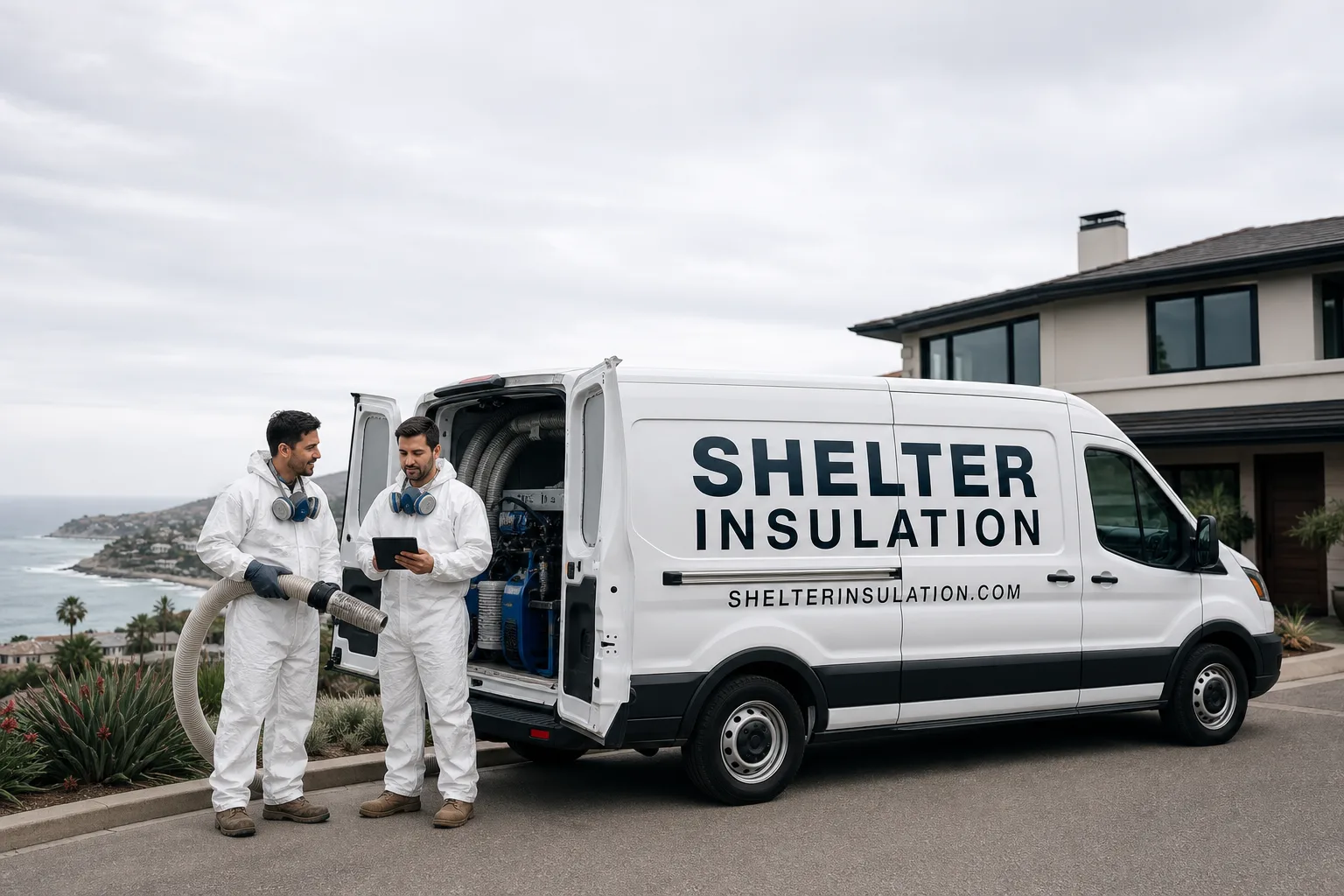
Fast, Reliable Spray Foam Insulation Across Good Hope
Spray foam insulation in Good Hope usually costs between $1.50 and $3.50 per board foot for open-cell and $2.50 to $5.50 per board foot for closed-cell, depending on the building and the scope. For most Good Hope properties, the real variable isn’t the foam itself. It’s whether we’re sealing one building or three.
That’s the first thing to understand about Good Hope. The ZIP code, 92572, covers a rural-residential patch of Riverside County where a lot of homeowners live on acreage and work out of detached garages, shops, and old manufactured homes that were never insulated to anything close to current Title 24 standards. When we roll out to a Good Hope property, we plan the day around the whole site, not just the house. You won’t pay for a second trip if the workshop needs attention too. Call (855) 341-3373 and tell us what’s on the property. We’ll map the foam work around all of it.
Why Shelter Insulation Is Good Hope’s Preferred Spray Foam Insulation Company
Homeowners in Good Hope tend to be self-reliant. Many handle their own fencing, livestock, and equipment maintenance. When they call us, it’s because they’ve already diagnosed the problem and they want it solved in one visit. That expectation shapes how we work here. Our crews carry multiple foam rigs, open- and closed-cell material, and the tooling to gasket oversized doors on the same trip. We don’t schedule a “door specialist” follow-up. It’s one crew, one day, every building on the lot.
Alan Brecker built Shelter Insulation around a material-agnostic approach, and that matters in Good Hope because no two properties look the same. A detached workshop with a south-facing steel wall needs closed cell. An older manufactured home with a shallow attic cavity needs open cell. A site-built house with bare duct runs in the attic needs the ducts sealed before the roof deck gets foamed. We’re authorized to install Icynene and Demilec spray foam lines, and we carry fiberglass, mineral wool, and cellulose for the areas where spray foam isn’t the right call. One company, every material, one warranty conversation.
Response time to Good Hope from our Southern California base runs same-day or next-day for most scheduled work. For mid-summer emergency calls, when an attic is hitting 140 degrees and a window unit can’t keep up, we do our best to get a tech out quickly. Good Hope sits far enough from the major supply houses that we stage material before we arrive. You won’t have a crew standing around waiting on a truck.
Garage Spray Foam Insulation in Good Hope
Garage Spray Foam Insulation in Good Hope almost always includes a conversation about the door. A sealed foam lid doesn’t help if a warped steel roll-up or an uninsulated wood door is letting heat pour in below it. We see this on detached garages throughout 92572, especially the ones built as equipment storage on rural lots. The garage bakes, the door panel gaps, and the homeowner wonders why the space never cools. The fix starts with the walls and ceiling, then we treat the door track, gaskets, and any thermal bridging around the opening.
Detached Garages on Larger Lots
On acreage properties, the detached garage often runs 20 to 30 feet deep with a door that’s eight or ten feet tall. That’s more square footage than a city living room, and it’s usually uninsulated. We size the foam around the door height and opener clearance before we size around square footage. Closed cell on the sun-facing walls and rim, open cell in the ceiling cavity, and attention to the door perimeter. A typical detached garage job in Good Hope runs $3,200 to $7,500 depending on size and door condition.
Workshop Ceilings and Equipment Storage
If you store tools, paint, or anything heat-sensitive in a Good Hope outbuilding, the ceiling is the first thing to address. That’s where the sun heats the roof deck and radiates downward all afternoon. We spray the underside of the roof deck with closed cell to create a thermal break, then seal the wall-to-deck transition so air doesn’t leak through. For a standard two-car workshop, expect $2,800 to $5,400.
Closed Cell Spray Foam Insulation in Good Hope
Closed Cell Spray Foam Insulation in Good Hope is the material we specify most often for south- and west-facing walls, rim joists, and unconditioned outbuildings. It’s denser than open cell, adds structural strength, and acts as a vapor barrier, which matters in a climate where the summer heat pumps moisture into the attic and the temperature swings stress the framing. On a triple-digit day in Good Hope, a south wall with closed cell stays noticeably cooler to the touch than an uninsulated one. That’s radiant heat rejection doing its job.
Sun-Blasted Walls and Rim Joists
Any Good Hope structure with a wall facing the afternoon sun is a candidate for closed cell. We apply it to the rim joist to stop air infiltration at the foundation line, then up the wall cavity where batt insulation would sag and leave gaps. Closed cell runs $2.50 to $5.50 per board foot installed, and a typical rim joist job for a site-built home in 92572 lands between $900 and $2,200.
Roof Decks Over Stored Equipment
When the attic or shop ceiling needs to stay within a livable temperature range for stored equipment, closed cell on the roof deck is the most effective option. It seals the deck, blocks radiant heat, and keeps the space below from turning into a convection oven. This is the application we used on a detached workshop off the 92572 acreage properties, where the homeowner’s window unit couldn’t hold a temperature until we foamed the lid and gasketed the door track. Expect $4,000 to $9,000 for most Good Hope outbuildings.
Trusted Brands We Service in Good Hope
We carry Icynene and Demilec spray foam because they’re two of the most widely specified products in high-performance building envelopes, and Good Hope’s demand for heat-resistant sealing makes them ideal. We also stock Owens Corning fiberglass and GreenFiber cellulose for the parts of a Good Hope property where foam isn’t the right tool: shallow cavities, old manufactured home ceilings, or cost-conscious sections of a detached building. Local parts and material staging for 92572 customers means we’re not waiting on a supplier run from the city. One trip, stocked and ready.
Common Spray Foam Insulation Problems We See in Good Hope Homes
- Foam sprayed in a detached workshop without treating the roll-up door. The foam seals the walls and ceiling, but the door becomes the weak point. The building still bakes because heat pours through the door panels and gaps around the track. We always check door insulation and gasketing before claiming the building is sealed.
- Attic foam applied over collapsed or bare duct runs in older site-built or manufactured homes. If the ducts leak, the cooled air never reaches the rooms no matter how much foam is on the roof deck. Duct sealing comes first. Then the foam.
- Open-cell foam used on a sun-blasted south or west wall where closed cell is needed. Open cell is a great air sealant, but it doesn’t reject radiant heat the way closed cell does. On a Good Hope wall that takes direct afternoon sun all summer, open cell leaves the building warmer than it should be.
- Manufactured homes with original thin batt insulation in the attic. The batt collapses, gaps open at the truss lines, and the attic becomes a heat trap. A Good Hope manufactured home’s roof cavity may only be four to six inches deep, so open cell spray foam is often the only product that fits and actually seals.
Pricing for Spray Foam Insulation in Good Hope, CA
Open-cell spray foam in Good Hope runs $1.50 to $3.50 per board foot installed. Closed cell runs $2.50 to $5.50 per board foot. For a typical detached workshop ceiling and walls, budget $3,000 to $7,500. A rim joist job on a site-built home usually lands between $900 and $2,200. A full attic roof deck on a manufactured home runs $2,500 to $5,000. The biggest cost driver in 92572 is the number of buildings on the lot and the condition of the access doors. We give free estimates and we’ll walk the whole property with you before quoting, so there’s no surprise line item later. Call (855) 341-3373 to schedule.
We Also Serve Cities Near Good Hope
Our crews regularly work Good Hope and the surrounding Riverside County communities, including Perris, Romoland, Sun City, and Mead Valley. If you’re in one of those areas and researching Spray Foam Insulation options, the same material-agnostic approach applies. For more about how we serve this specific part of the county, see our Spray Foam Insulation in Good Hope coverage.
Serving Good Hope, CA — Our Local Coverage Area
We’re based in the Good Hope area and know this community well. Use the map below to see our service coverage — if you’re nearby, we can almost certainly help.
FAQs About Spray Foam Insulation in Good Hope
Yes, that’s standard for our Good Hope jobs. Because 92572 properties often include multiple buildings, we schedule the day around the whole site, not just the main house. Tell us what’s on the lot when you call, and we’ll stage enough material to handle the house, the workshop, and any other outbuildings in one trip. Call (855) 341-3373 and describe the property; estimates are free.
Yes, if the door is treated along with the walls and ceiling. On its own, spray foam on the walls and lid will reduce heat gain dramatically, but an uninsulated or poorly gasketed roll-up door remains a leak point. We inspect and seal the door track as part of the garage job. For heat-sensitive items, closed cell on the ceiling and sun-facing walls is the most effective combination.
Most manufactured homes in Good Hope are better served by open cell in the attic. The roof cavity is typically shallow, and open cell expands to fill irregular framing and seal air gaps without adding excessive weight. Closed cell is reserved for situations where the homeowner needs structural reinforcement or a vapor barrier. We’ll inspect the cavity depth and recommend based on what’s actually there.
Because it has no attic buffer and usually no ceiling insulation at all. The sun heats the roof deck directly, and that heat radiates into the space below within minutes. The larger the roof area relative to the wall area, the worse the effect. On a triple-digit Good Hope afternoon, an uninsulated workshop roof deck can exceed 140 degrees. Foaming the underside of that deck creates a thermal break that stops the radiant transfer.
We coordinate access before the appointment. If the gate is narrow, the drive is long, or the outbuilding is set back behind the house, we’ll confirm the path with you when scheduling. Our crews run hose lines up to 200 feet from the rig, so we can reach most Good Hope outbuildings without repositioning. If you’re on a rural lot in 92572, just tell us the distance from the road when you call and we’ll plan accordingly.
Written by Alan Brecker, Owner at Shelter Insulation, serving Good Hope and the surrounding Riverside County communities.