
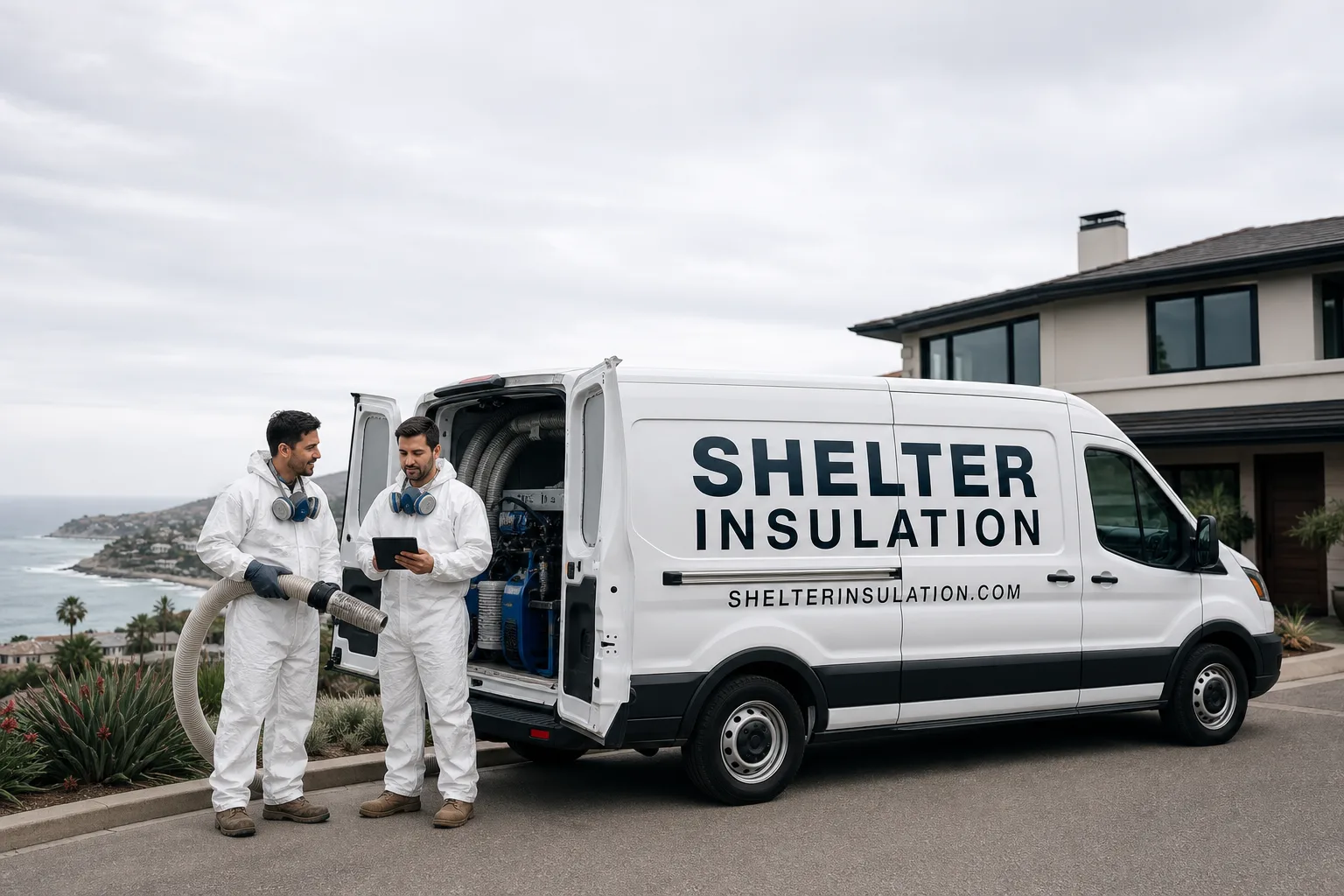
Fast, Reliable Spray Foam Insulation Across West Puente Valley
Spray foam insulation in West Puente Valley addresses a problem most homeowners here inherit: mid-century tract homes built with little or no insulation, now roasting through 95 to 100 degree summer afternoons and leaking warmth on winter nights that dip into the 30s. Our crews work these 91746 streets regularly, and we know what’s waiting in the attics of these 1950s and 60s stucco houses before we pop the hatch. If your cooling bills have climbed every summer and rooms still feel uneven, call (855) 341-3373 for a free estimate. We’re usually on-site within a day or two, and a scoped inspection will tell you exactly what your attic needs.
Why Shelter Insulation Is West Puente Valley’s Preferred Spray Foam Insulation Company
West Puente Valley homeowners call us because we tell them the truth about what’s in their attic before we sell them anything. That matters here. Homes in this pocket of the San Gabriel Valley were built fast in the post-war boom, and most original attics we open hold degraded batt insulation that’s been settling for sixty years or more. Our Spray Foam Insulation team has worked enough of these raised-foundation tracts to know the difference between a simple top-off and a full envelope retrofit. We don’t recommend foam over contamination, and we don’t cut corners around old wiring. That’s why homeowners keep referring us to neighbors along Valley Boulevard and the side streets off Merced Avenue.
The reviews we get from West Puente Valley customers consistently mention the same things: we explain the options clearly, we show them what we found in the attic, and we don’t use pressure. Alan Brecker, who leads our crews, insists on that. We carry eight manufacturer lines because one material can’t solve every problem, and in West Puente Valley’s housing stock, that breadth matters more than almost anywhere else we work. Single-contractor accountability is the other part: one crew handles attic, wall, and rim joist work, so you’re never coordinating between trades.
Spray Foam Attic Insulation in West Puente Valley
Spray Foam Attic Insulation in West Puente Valley typically involves converting a vented attic on a 1950s or 60s stucco tract home into an unvented, sealed assembly that brings the attic inside the home’s building envelope. That conversion is the highest-leverage change you can make on these houses. The inland San Gabriel Valley heat bakes these attics all summer: roof deck surfaces regularly climb past 140 degrees, and that radiant heat drives cooling load directly into living space below. Our technicians first inspect for rodent activity, settled insulation, and wiring clearances, then scope either open-cell or closed-cell foam depending on the roof deck condition and your long-term plans. A full roof deck application on a typical West Puente Valley rancher runs roughly $5,500 to $9,500 depending on square footage and prep work. Removal of contaminated existing insulation adds $1,200 to $2,800 on most jobs here.
Removal and Prep for Contaminated Attics
West Puente Valley attics have a rat problem, and nobody talks about it enough. Roof rats tunnel through old batt and cellulose, leaving trails of droppings and urine that contaminate whatever they touch. Spraying foam over that contaminated material is a mistake. It traps the waste, creates voids where foam can’t bond, and leaves you with a sealed-in odor source. Our crews remove and bag contaminated material under full PPE before any foam gets applied. This is now a standard part of the job on many West Puente Valley attics, not an unlikely add-on.
Air-Sealing Around Original Fixtures and Wiring
Foam alone won’t fix a drafty attic if the penetrations aren’t addressed. These 1950s and 60s houses were framed with knob-and-tube or early romex wiring, and the top plates are studded with holes from that era’s electrical work. We air-seal those penetrations before spraying, and we maintain proper clearance around any older wiring and unrated recessed can lights. Foam applied directly to older wiring creates a heat problem. Our crews know where to spray and where to leave space.
Spray Foam Wall Insulation in West Puente Valley
Spray Foam Wall Insulation in West Puente Valley is a targeted retrofit on homes whose stucco-clad wall cavities are often empty or hold only a thin fiber batt that’s fallen away over decades. Your single-story tract home on a raised foundation has wall cavities that act like chimneys: heat rises through them into the attic, and winter drafts push cold air through every outlet and switch plate. On these 1950s and 60s builds, injection foam or pour foam fitted into existing cavities is the practical route for most homeowners who don’t want to tear out drywall. A whole-home wall cavity injection on a typical West Puente Valley rancher runs $4,000 to $8,000 depending on accessible cavities and prep. When we’re already converting the attic, wall work makes sense as a combined scope.
Stucco Wall Cavities and Raised Foundations
West Puente Valley’s stucco walls look solid from the street, but behind that stucco is often just a one-inch gap between studs and sheathing with nothing worth calling insulation. The raised foundation below adds another wrinkle: crawlspace air rises into the wall cavities, carrying moisture and cold with it. Foaming the wall cavities cuts that air movement, but we also check the rim joist and crawlspace access points because an attic-only job leaves the house short-cycling on cold mornings. A full envelope retrofit on these homes means attic, walls, and rim joist all addressed in one scope.
When Wall Foam Follows Attic Conversion
If you’re already converting your attic to an unvented assembly, the walls become the next weak point. An unvented attic with leaky wall cavities will still let air migrate up from the raised foundation and through the stucco, undermining what you just paid for. We scope wall cavity injection after the attic conversion on many West Puente Valley jobs because the two systems work as one. Alan Brecker’s crews are trained to sequence this properly, so you’re not left with condensation problems later.
Trusted Brands We Service in West Puente Valley
We carry Demilec and Icynene spray foam lines alongside Owens Corning, Johns Manville, Knauf, Rockwool, CertainTeed, and GreenFiber because West Puente Valley homes need different materials for different jobs. Closed-cell Demilec handles roof deck applications on original tongue-and-groove sheathing where moisture resistance matters. Open-cell Icynene fills wall cavities and rim joist bays where you need an air seal but not the full density of closed cell. And GreenFiber cellulose sometimes makes more sense for topping off areas where foam isn’t the right call. Parts and materials are stocked locally for fast turnaround on West Puente Valley jobs, so a scoped retrofit doesn’t stall waiting on a distributor in Orange County.
Common Spray Foam Insulation Problems We See in West Puente Valley Homes
- Rodent-contaminated batts left under foam. We’ve pulled enough tunnels through old insulation in this 91746 housing stock to know this is the rule, not the exception. Foam sprayed directly over droppings-laced batts traps contamination and leaves voids where the foam can’t bond to the roof deck. Removal first, always.
- Closed-cell foam against knob-and-tube era wiring. Original 1950s electrical work sits in many West Puente Valley attics. Foam that touches older cloth-sheathed or knob-and-tube wiring creates a heat trap, and we see the consequences in attics where a previous contractor sprayed without clearances. The fix is careful air-sealing and proper standoff around any older wiring.
- Foamed attic with raised-foundation crawlspace still leaking air. An attic converted to an unvented assembly doesn’t stop drafts from the crawlspace below the house. West Puente Valley homes on raised foundations lose winter heat through rim joists and wall cavities even with a sealed attic. The envelope needs to be treated as one system.
- Recessed can lights with only inches of old material above them. Original recessed fixtures in these 1950s and 60s ceilings run hot, and most are not IC-rated for insulation contact. We see degraded batts heaped within inches of cans that need proper sealing and rating checks before any foam goes near them.
Pricing for Spray Foam Insulation in West Puente Valley, CA
A full roof deck spray foam conversion on a typical West Puente Valley single-story rancher runs $5,500 to $9,500, including removal of existing contaminated batts when that’s part of the scope. Wall cavity injection for a whole home lands $4,000 to $8,000. Rim joist sealing around a raised foundation adds $1,800 to $3,500 depending on access and crawlspace condition. The square footage of your roof deck, the depth of contamination removal, and whether your recessed fixtures need rating upgrades all shift the final number. We give free estimates, and we itemize every line so you can see what’s prep, what’s material, and what’s labor. Call (855) 341-3373 and we’ll schedule a site visit in West Puente Valley within a day or two.
We Also Serve Cities Near West Puente Valley
Our crews work the whole Puente corridor, so if you’re in Avocado Heights, La Puente, Valinda, or South El Monte, you’re inside our regular service radius. The housing stock in those communities mirrors what we see in West Puente Valley: mid-century stucco tract homes on raised foundations with similar insulation gaps. We schedule across the entire area weekly.
Serving West Puente Valley, CA — Our Local Coverage Area
We’re based in the West Puente Valley area and know this community well. Use the map below to see our service coverage — if you’re nearby, we can almost certainly help.
FAQs About Spray Foam Insulation in West Puente Valley
No, and we won’t do it. Spray foam can’t bond properly to batts that have been tunneled through and contaminated with droppings, and sealing over that contamination just traps it inside your attic. We remove and bag the old material first, under full PPE, then prep the roof deck for foam. Call (855) 341-3373 and we’ll inspect your attic and give you a line-item removal quote before any foam gets ordered.
Yes, but only with the right sequencing. Foam can’t touch older knob-and-tube or cloth-sheathed romex directly, and unrated recessed fixtures need standoff clearance. We air-seal around all penetrations and maintain proper clearances around any original wiring before we spray. A real retrofit on these houses means prepping the envelope first and foaming second.
Because West Puente Valley sits inland where summer afternoons routinely cross 95 degrees, and your attic roof deck bakes all day. Coastal homes rarely see those sustained radiant loads. Here, converting a vented attic to an unvented sealed assembly directly cuts your cooling load, because the attic stops being a heat source sitting on top of your living space.
We use Demilec closed-cell foam for roof deck applications where moisture resistance and density matter, and Icynene open-cell foam for wall cavities and rim joist bays where air sealing is the main goal. We also carry Rockwool, Owens Corning, Johns Manville, Knauf, CertainTeed, and GreenFiber for areas where foam isn’t the right tool.
Almost always the rim joist area above the crawlspace. Raised foundations let air move up through the wall cavities, and if you only seal the attic you’ve addressed the top of the envelope but not the bottom. We scope rim joist sealing on most West Puente Valley retrofits and often recommend wall cavity injection. Call (855) 341-3373 and we’ll walk you through the full envelope picture for your specific house.
Written by Alan Brecker, Owner at Shelter Insulation, serving West Puente Valley and the surrounding San Gabriel Valley communities.