
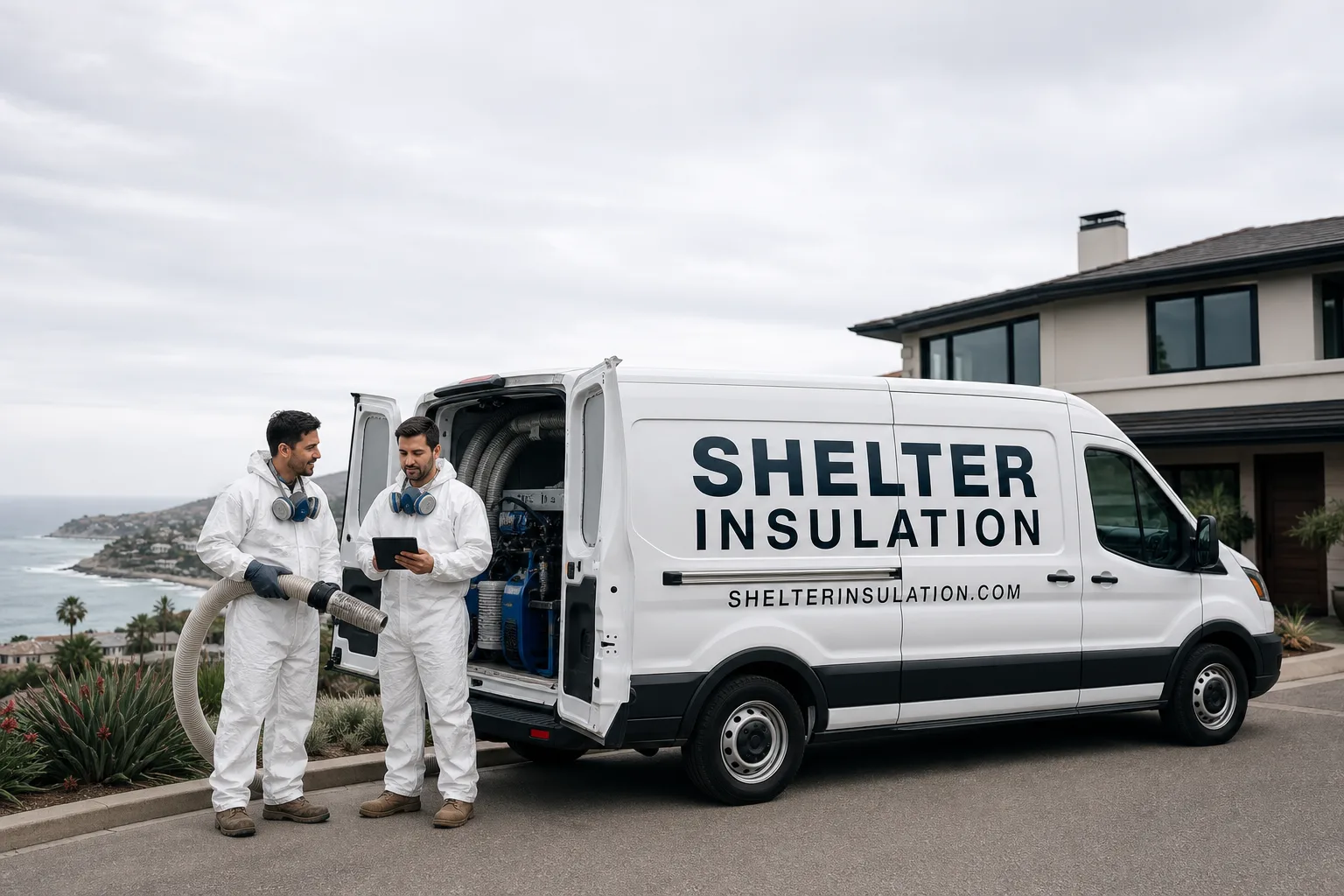
Fast, Reliable Attic Insulation Across Cypress
Attic insulation in Cypress usually means retrofit work in a shallow, nearly flat roof cavity, not the deep, steep-pitch attics you find in neighboring hillside cities. Most homes here were built between the late 1950s and the 1980s, and plenty still have their original R-11 to R-13 batt or rock wool, which has sagged, compressed, or settled well below what today’s Title 24 envelope standards require. That’s why our crews spend as much time air sealing top plates and clearing blocked soffit vents as they do adding R-value. If your upstairs rooms bake in the afternoon or chill down fast after sunset, call us at (855) 341-3373 for an honest assessment.
Why Shelter Insulation Is Cypress’s Preferred Attic Insulation Company
Cypress homeowners call us because we stock materials from eight manufacturers, which means we match the product to the house instead of pushing whatever’s on the truck. Our Attic Insulation team works with Owens Corning, Johns Manville, Knauf, Rockwool, CertainTeed, Icynene, Demilec, and GreenFiber, covering fiberglass, mineral wool, spray foam, and cellulose. That breadth matters in a city like Cypress, where one tract home might need blown-in fiberglass over failing rock wool while a 1980s build needs closed-cell foam against a low-slope deck.
Alan Brecker leads our crews, and he’s built the company around a simple idea: one crew handles every insulation method, so you get one point of contact and one warranty conversation. We carry Rockwool because of its fire resistance and sound attenuation, not just thermal performance, and we offer Reflectix service in Cypress for radiant barrier needs. We carry Icynene and Demilec spray foam because they’re among the most specified brands in high-performance building envelopes. And we carry GreenFiber because blown-in cellulose reaches where batts can’t, which matters in Cypress’s tight, shallow attic cavities.
Radiant Barrier in Cypress
A radiant barrier in Cypress is often the highest-impact upgrade for homes with low-slope roofs and limited attic clearance, since it reflects radiant heat before it ever reaches your insulation. In Cypress’s warm, dry summers, an attic can hit 140°F or more without one, and that heat radiates down through the ceiling into living spaces. Adding a radiant barrier under your roof deck typically runs $1,200 to $2,400 for a standard 1,500 to 2,000-square-foot home in Cypress, depending on access and whether we’re also air sealing or adding insulation at the same time.
Foil Deck Installation
We staple a reinforced foil layer to the underside of the roof deck, leaving the recommended air gap that lets it reflect heat back out through the roof. In low-clearance Cypress attics, this is often easier and more effective than trying to add more bulky batt insulation that won’t fit evenly.
Combined Radiant Barrier and Insulation
Most Cypress jobs pair the radiant barrier with fresh blown-in insulation. The barrier handles the summer heat gain, and the insulation handles both heat gain and the evening chill during those occasional cold snaps when the marine layer sits over the city all day.
Attic Cleaning Services in Cypress
Attic cleaning services in Cypress usually involve removing decades of dust, old rodent debris, and degraded insulation fibers before new material goes in. The cost typically falls between $600 and $1,400, depending on attic size, contamination level, and whether we need to wet-vac or HEPA-vacuum the cavity. In Cypress’s older tract pockets, blocked soffit vents are the norm, and cleaning them out is part of the job, not an upsell.
Old Insulation Removal
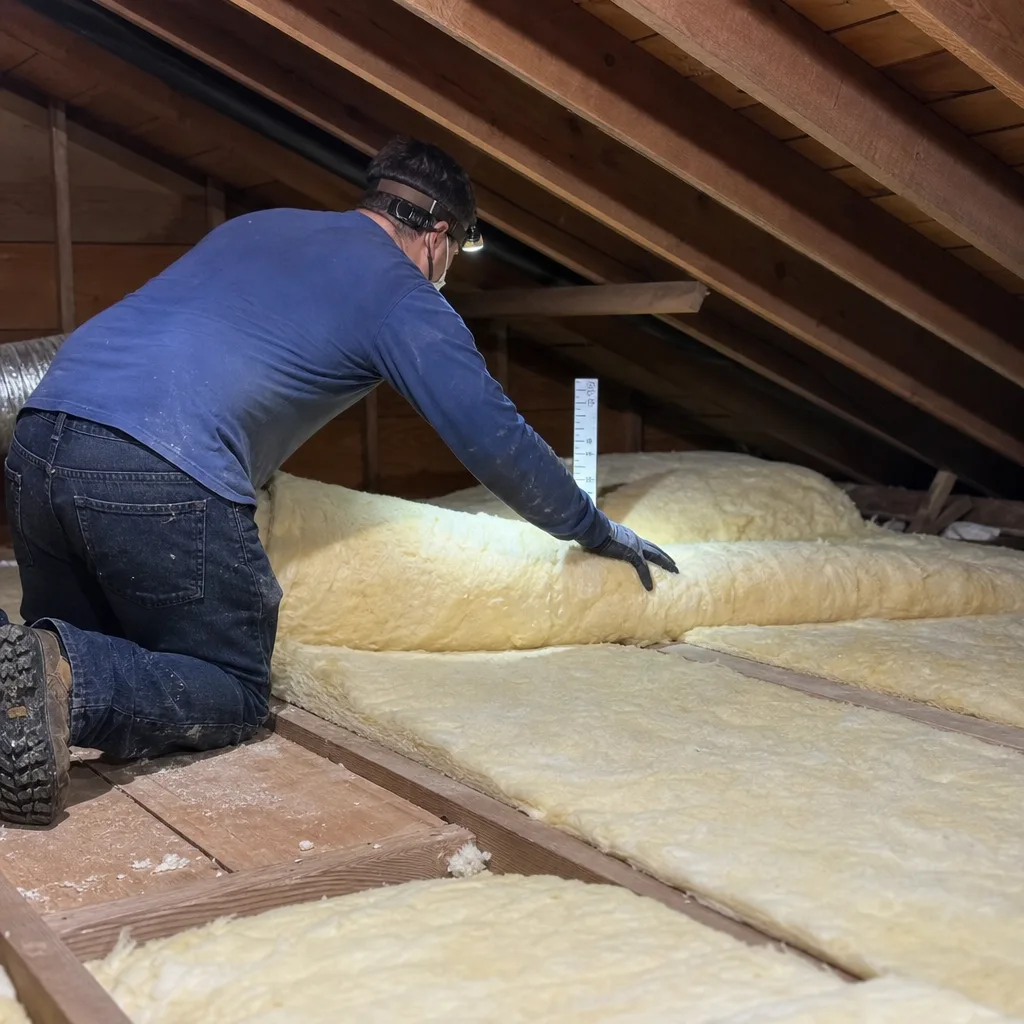
If your 1960s or 70s home still has original rock wool or fiberglass batt that’s been compressed, water-stained, or chewed through by rodents, removing it before installing new material is the right call. We bag and vacuum the old material, sanitize the cavity, and prepare the deck so new insulation performs as rated.
Soffit Vent Clearing
Decades of dust and debris choke the soffit vents in low-slope Cypress roof cavities, which starves the attic of airflow. Our crews clear and re-baffle the vents before adding insulation, so the marine-layer humidity that rolls in off the coastal plain doesn’t get trapped against your ceiling assembly.
What happens when you call
- 1
A real person answersNo phone trees — you reach a local pro.
- 2
You get an upfront price rangeHonest numbers before anyone is dispatched.
- 3
A background-checked tech heads outLicensed & insured, dispatched right away.
- 4
You approve before work beginsNothing starts until you say go.
Trusted Brands We Service in Cypress
We carry Owens Corning and Johns Manville because their blown-in fiberglass lines hit the sweet spot for Cypress’s retrofit cavities: consistent coverage, dependable R-value, and easy installation through reduced-profile hoses in tight spaces. We also stock Knauf batts for accessible attic floors and GreenFiber cellulose when a homeowner wants a higher recycled content or better sound damping. Since we’re material-agnostic, we’ll tell you when one brand makes more sense for your house, and we keep common parts and materials ready so Cypress projects don’t stall waiting on shipments.
Common Attic Insulation Problems We See in Cypress Homes
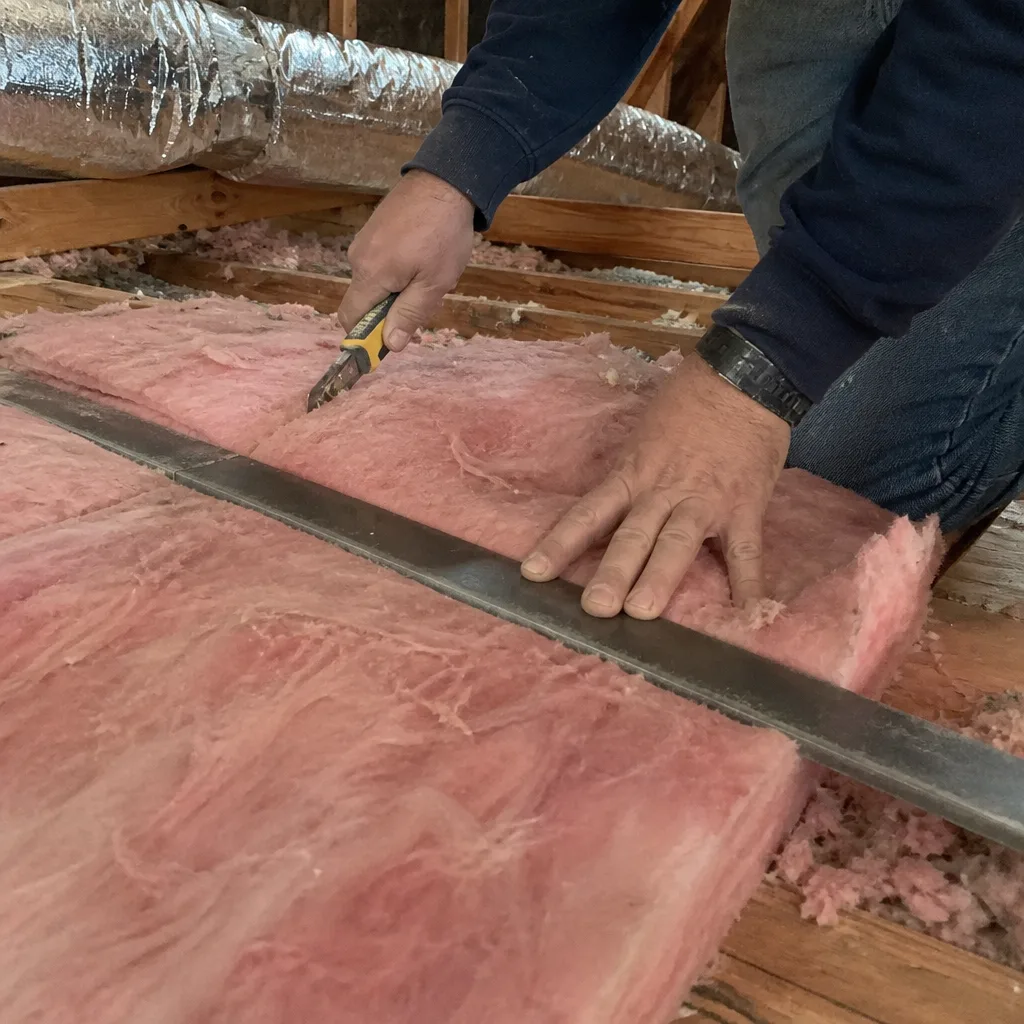
- Sagging original rock wool and R-11 batt: Most 1960s and 70s Cypress tract homes still have their original insulation, which has compressed or slipped over time. The R-value drops dramatically once the material loses its loft, and adding more on top without air sealing doesn’t fix the leakage path.
- Blocked soffit vents in low-slope cavities: Nearly flat roofs leave little clearance, and decades of dust choke the intake vents. When ventilation fails, new insulation traps moisture from the morning marine layer against the ceiling assembly, which leads to staining and reduced effectiveness.
- No air barrier at the top plates: We routinely find gaps at the junction of walls and ceiling in Cypress homes. Air leaks through these gaps regardless of how much insulation sits in the attic, so sealing them is step one, not step five.
- Uneven blown-in coverage with thin spots: Low-clearance attics make even coverage genuinely difficult. Thin spots allow concentrated heat gain in summer and chilly drafts in winter, which is why we take time to blow carefully rather than rushing through a square-footage quota.
Pricing for Attic Insulation in Cypress, CA
A typical blown-in attic insulation job in Cypress runs $1,800 to $3,200 for a standard 1,500 to 2,000-square-foot home, with the final number driven by old insulation removal, air sealing scope, and how much vent detailing the cavity needs. Attic cleaning services add $600 to $1,100 in most cases, and a radiant barrier runs another $800 to $1,400 depending on roof deck access. Homes in the 90630 ZIP with shallow cavities and blocked vents land at the higher end because the prep work takes longer. Call (855) 341-3373 for a free estimate, and we’ll walk the attic with you before quoting a single number.
We Also Serve Cities Near Cypress
Shelter Insulation provides the same material-agnostic service to Attic Insulation in Cypress and the surrounding communities of La Palma, Los Alamitos, Rossmoor, and Hawaiian Gardens. Each has its own housing mix, but the retrofit challenges are similar: aging insulation, low-slope roofs, and the Orange County coastal climate.
Serving Cypress, CA — Our Local Coverage Area
We’re based in the Cypress area and know this community well. Use the map below to see our service coverage — if you’re nearby, we can almost certainly help.
FAQs About Attic Insulation in Cypress
Cypress attic work costs more in labor because the cavities are shallow and nearly flat, so access is slow and careful work. A 1,200-square-foot attic here often takes longer than a 2,000-square-foot attic in a hillside city with a deep pitch, because our techs are kneeling or crouching the whole time and can’t get even hose coverage without repositioning constantly. Call (855) 341-3373 to have us look at your specific attic and tell you what the prep work will actually involve.
Sometimes yes, but only after we’ve checked for sagging or compressed material, blocked vents, and air leaks at the top plates. In a 1968 tract home off Orange Avenue, we found original rock wool batt sagging with no air barrier at the top plates, so we air-sealed, cleared and baffled the vents, and blew Owens Corning fiberglass over the assembly. The low clearance meant using a reduced-profile hose and careful venting. If the old material is degraded, rodent-soiled, or badly compressed, removing it first produces a better result, and we’ll tell you honestly which path fits your attic.
Yes, the persistent morning marine layer means moisture management matters as much as R-value in Cypress. Warm, dry summers pull heat into the attic, but the coastal humidity can linger against the ceiling assembly if ventilation is poor. We favor blown-in fiberglass and careful vent detailing here because the combination handles the dry heat and the occasional dampness without creating conditions for condensation.
Yes, in most Cypress homes the radiant barrier delivers the fastest summer comfort improvement. Since your roof cavity is shallow, adding more batt or loose-fill insulation alone often can’t overcome the radiant heat coming through the deck. A radiant barrier paired with fresh insulation typically costs $2,600 to $4,600 total for a standard home, and it addresses both the afternoon heat gain and the evening chill in one visit.
If you can see dust-caked soffit vents, rodent droppings, or staining on the old material, the attic needs cleaning before installation. In Cypress homes built in the 60s and 70s, blocked vents and contaminated insulation are the rule rather than the exception, and installing new material over a dirty, poorly ventilated cavity wastes the investment. We’ll inspect and tell you what’s actually needed, and you can reach us at (855) 341-3373 to schedule that look.
Written by Alan Brecker, Owner at Shelter Insulation, serving Cypress and northwest Orange County.