
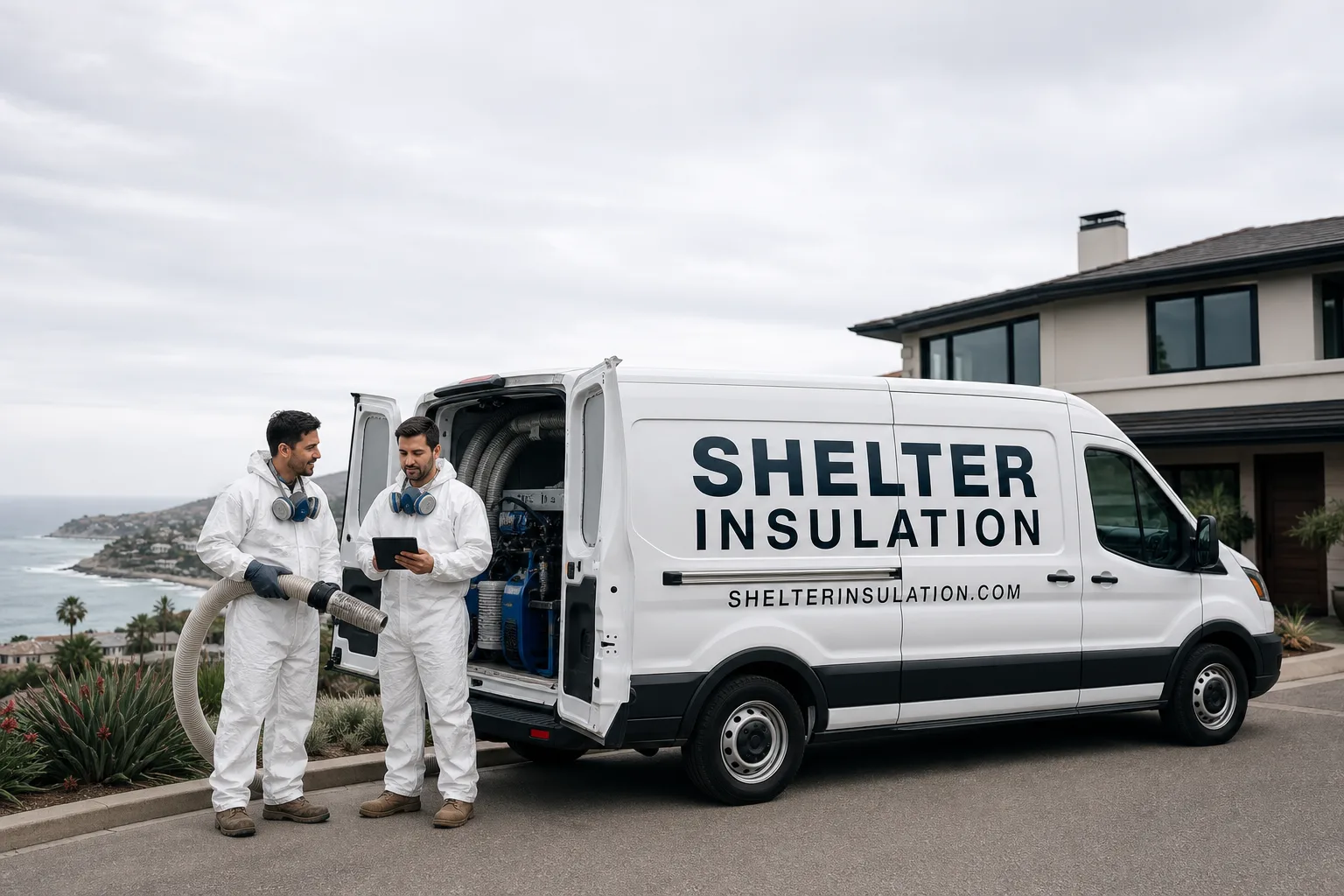
Fast, Reliable Attic Insulation Across La Habra Heights
Attic insulation in La Habra Heights is rarely a standard blow-and-go job. Most homes here are custom builds from the 1960s through 1990s on multi-acre lots, many with vaulted ceilings, unvented attic spaces, and decades of wildlife activity from the surrounding avocado groves and horse paddocks. Our crews know the hillside terrain, the private roads off Hacienda Boulevard, and the specific challenges of working around equestrian properties. If you’re losing heat in winter or feeling the Puente Hills afternoon sun bake through your upstairs rooms in summer, call us at (855) 341-3373 for a free estimate and an honest read on what your attic actually needs.
Why Shelter Insulation Is La Habra Heights’s Preferred Attic Insulation Company
We carry eight manufacturer brands – Owens Corning, Johns Manville, Knauf, Rockwool, CertainTeed, Icynene, Demilec, and GreenFiber – because no single material fits every La Habra Heights attic. A 1970s stucco-and-wood-frame custom with vaulted ceilings needs a different approach than a newer build with a conventional attic floor. Being authorized across all eight lines means we don’t have to wedge your project into whatever we happen to stock.
Response time matters when you’re dealing with exposed insulation after a rodent removal or a ventilation problem that’s heating your upstairs to 90 degrees by 4 p.m. We schedule work in La Habra Heights every week, and our crews know how to maneuver equipment up private drives without damaging landscaping or disturbing horses on adjacent properties.
Alan Brecker leads the company with a simple standard: the right material for your home’s specific challenge. That means we will recommend Attic Insulation that fits your house, your budget, and your actual moisture and wildlife situation – not whatever has the highest margin.
Radiant Barrier in La Habra Heights
Radiant Barrier in La Habra Heights addresses a specific heat-load problem: the south- and west-facing roof decks on hillside homes take direct afternoon sun from roughly 1 p.m. until sunset. A radiant barrier installed on the underside of those roof surfaces reflects a significant portion of that radiant heat back out before it ever reaches your insulation. For custom homes on open slopes off Skyline Drive or along the upper stretches of Hacienda Boulevard, this single upgrade often cuts upstairs cooling costs more noticeably than adding another layer of fiberglass. A typical radiant barrier installation in La Habra Heights runs $1,800 – $3,200 depending on roof geometry and attic accessibility.
How We Install It
We attach the barrier to the underside of the roof decking or in the rafter bays, keeping a clear air gap on the reflective side. In tight hillside attics with limited clearance, we typically work from the perimeter rather than pulling everything through one small access point.
When It Makes Sense
Radiant barrier delivers the strongest return in La Habra Heights when the attic has vaulted or semi-vaulted ceilings, when ductwork runs through unconditioned space, or when you’re already planning to replace disturbed insulation. We often pair it with a high-R blown-in fiberglass or cellulose top-up so the two systems complement each other.
Attic Cleaning Services in La Habra Heights
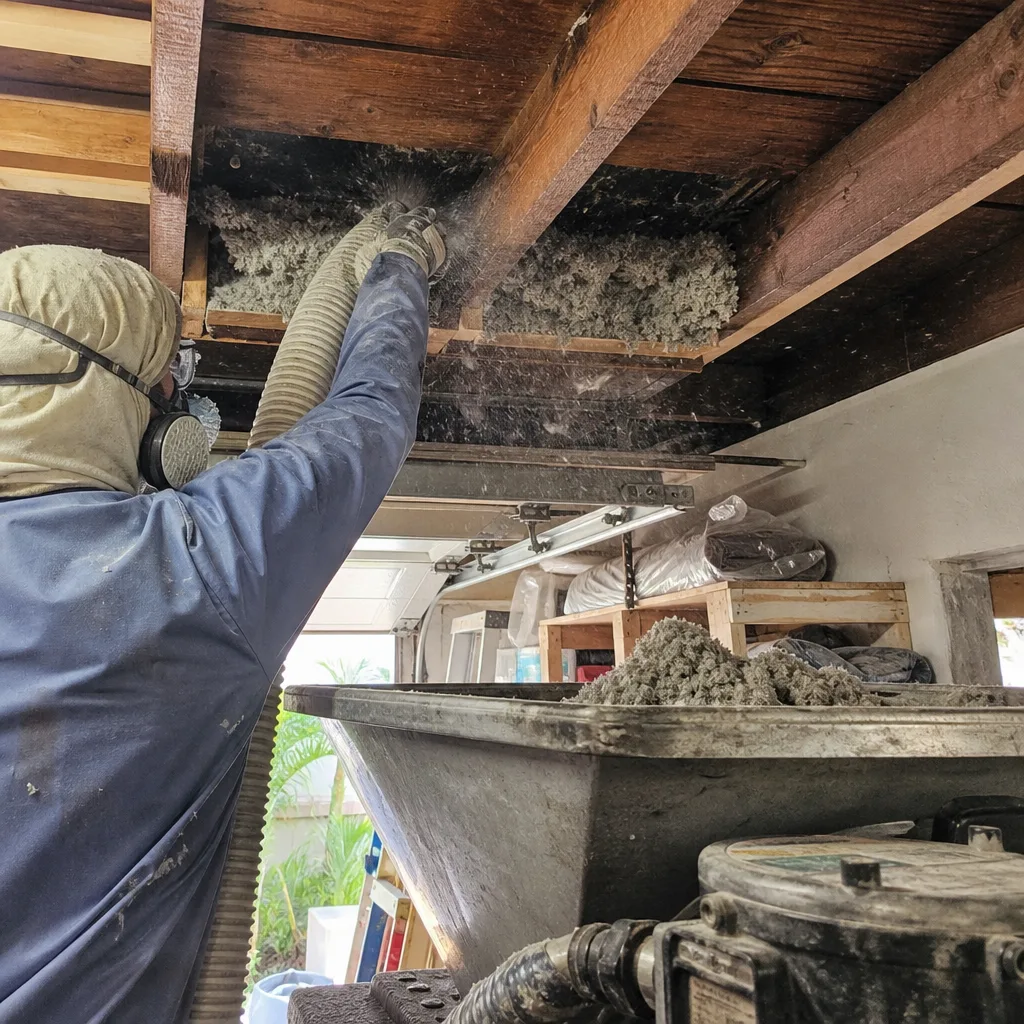
Attic Cleaning Services in La Habra Heights are rarely about clearing out old holiday decorations. On these hillside lots, attics collect rodent droppings, nesting material, old disturbed fiberglass, and fine dust that migrates into your living space through ceiling penetrations. We pull out the contaminated or deteriorated material, bag it, and prepare the cavity for new insulation. A full attic cleaning here typically costs $1,200 – $2,600 depending on attic size and the extent of contamination, before any new insulation goes in.
What We’re Actually Removing
In homes built between the 1960s and 1990s, we routinely find original fiberglass batts that have been pulled apart by rodents tunneling from the surrounding groves. Simply blowing new material over those runs does nothing – the animals return through the same entry points and the new insulation settles into the voids. We identify those entry paths and address them before the insulation phase.
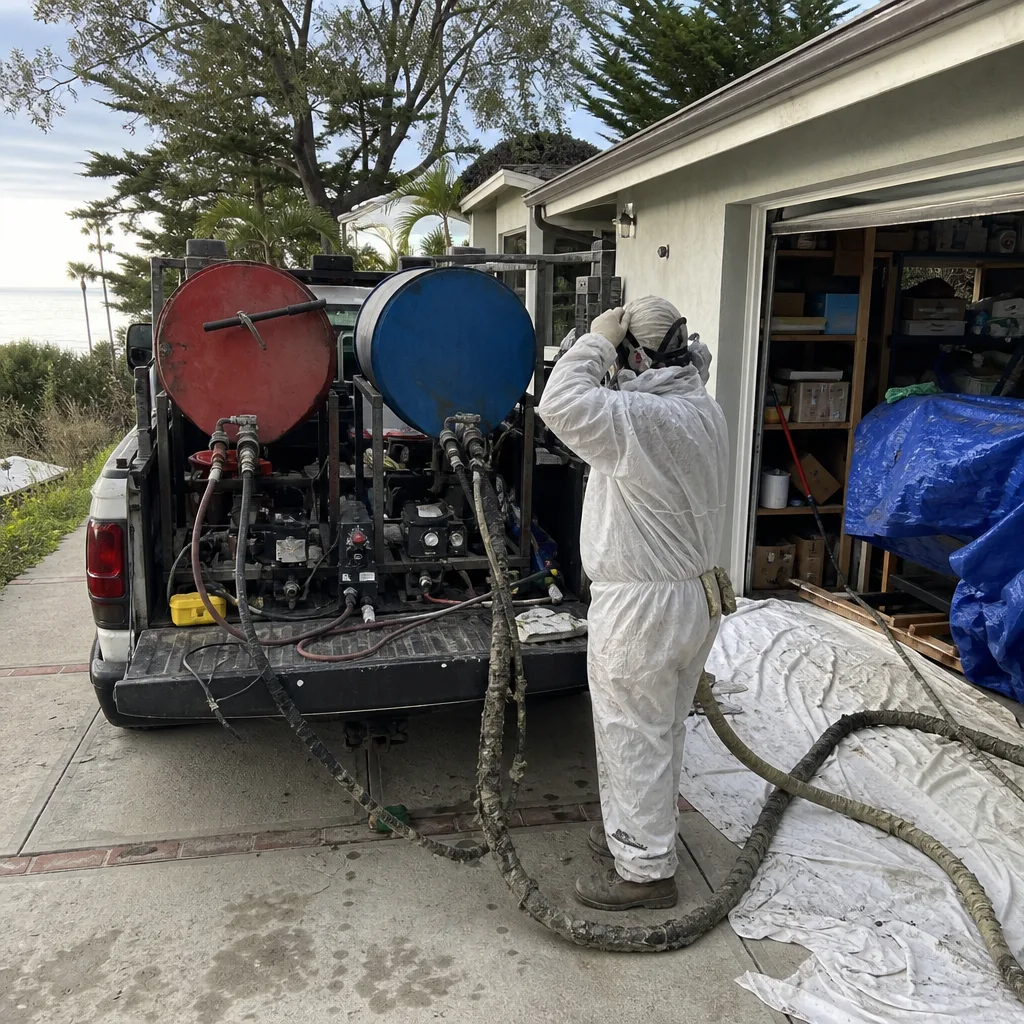
Air-Sealing and Prep
Cleaning also involves sealing top plates, can lights, wiring penetrations, and plumbing chases – the paths that let conditioned air leak from your living space into the attic. On vaulted custom ceilings with exposed beams, we take extra care around beam pockets and irregular framing where conventional sealing methods can’t reach.
What happens when you call
- 1
A real person answersNo phone trees — you reach a local pro.
- 2
You get an upfront price rangeHonest numbers before anyone is dispatched.
- 3
A background-checked tech heads outLicensed & insured, dispatched right away.
- 4
You approve before work beginsNothing starts until you say go.
Trusted Brands We Service in La Habra Heights
We stock and install Owens Corning, Johns Manville, GreenFiber, and Demilec products for La Habra Heights homes. We carry Johns Manville blown-in fiberglass because it settles predictably and holds its R-value even after temperature swings. GreenFiber cellulose made from recycled paper gives us a dense-pack option for unvented sloped assemblies. Demilec closed-cell spray foam handles air-sealing and insulation in a single step when framing depths are tight. If your attic has specific acoustic or fire-resistance demands, we can also supply Rockwool. Because we keep these materials stocked locally for our Southern California service area, material delays on La Habra Heights jobs are minimal.
Common Attic Insulation Problems We See in La Habra Heights Homes
- Rodent-disturbed batts without exclusion work first. Decades-old fiberglass gets pulled apart by wildlife entering from avocado groves and paddocks. New insulation over those runs collapses in R-value within a year or two because the animals tunnel right back through.
- Unvented vaulted ceilings with no intake path. Many 1960s-1990s custom homes were built with vaulted wood-frame ceilings and no soffit or eave intake. Heat and moisture build up, so any added insulation underperforms without engineered ventilation.
- South- and west-facing roof decks overheating living space. Afternoon sun in the Puente Hills drives radiant heat straight through the roof assembly. Without a radiant barrier, added R-value alone won’t fully address the cooling complaint.
- Old compressible batts in tight hillside attics. Homes along private roads off Hacienda Boulevard often have attic clearances too small for conventional blown-in equipment. We adapt with dense-pack cellulose or spray foam in those spaces.
Pricing for Attic Insulation in La Habra Heights, CA
Attic insulation pricing in La Habra Heights depends on attic size, access difficulty, and condition of existing material, but you should expect to spend $1,800 – $4,500 for a full attic replacement on a 1,500-2,000 square foot home. Blown-in attic insulation top-up over usable existing material runs $900 – $1,800. Attic batt insulation installs typically land between $1,400 and $2,800. Replacement work with wildlife cleanup and air-sealing often reaches the higher end once contaminated material is removed. Every quote is free, and we walk you through the cost drivers. Call (855) 341-3373 to get exact numbers for your attic.
We Also Serve Cities Near La Habra Heights
Our crews work throughout the eastern LA County foothills, including La Habra, East La Mirada, Fullerton, and La Mirada. Many of those homes face the same heat and hillside conditions we handle here. If you’re just outside the 90633 boundary, we still want to help – read more about our work across La Habra Heights and the surrounding foothill communities.
Serving La Habra Heights, CA — Our Local Coverage Area
We’re based in the La Habra Heights area and know this community well. Use the map below to see our service coverage — if you’re nearby, we can almost certainly help.
FAQs About Attic Insulation in La Habra Heights
Because most homes here sit against avocado groves, open hillsides, and horse paddocks, rodents enter attics through eave gaps, roof penetrations, and gable vents. If you blow new insulation without closing those entry points, the animals tunnel back through the new material within a season and destroy its R-value. We always assess and address entry points before recommending new insulation. Call (855) 341-3373 and we’ll explain what’s happening in your specific attic.
Yes, but it needs engineered ventilation, not just more insulation. Vaulted unvented assemblies from that era trap heat and moisture because no intake path exists. We add venting or switch to dense-pack cellulose or closed-cell spray foam (Demilec) to handle the assembly properly. This is one of the most common upgrades we design for custom homes in the 90633 area.
It does, precisely because you’re at the eastern edge. Your elevation and distance from the coastal marine layer mean hotter summer afternoons and colder winter nights than in the coastal basin. Afternoon sun on south- and west-facing roof decks loads heat into your attic for hours; a radiant barrier interrupts that load before it reaches your insulation. We see the strongest payback on homes with central air conditioning and ductwork in the attic.
We install Owens Corning, Johns Manville, GreenFiber, Demilec, and other lines depending on the assembly. Johns Manville blown-in fiberglass covers conventional attic floors; GreenFiber cellulose suits dense-pack retrofit work in sloped ceilings; Demilec closed-cell spray foam addresses air-sealing and insulation simultaneously in tight spaces.
We bring only the equipment needed for the job, stage materials close to the access point, and keep noise to a minimum during working hours. Our crew is used to navigating private drives in La Habra Heights without blocking horse trailers or disturbing animals. Tight attic clearances are handled with dense-pack hoses and low-profile access rather than full-size blowing machines inside the home.
Written by Alan Brecker, Owner at Shelter Insulation, serving La Habra Heights and surrounding foothill communities.