Fast, Reliable Attic Insulation Across Long Beach
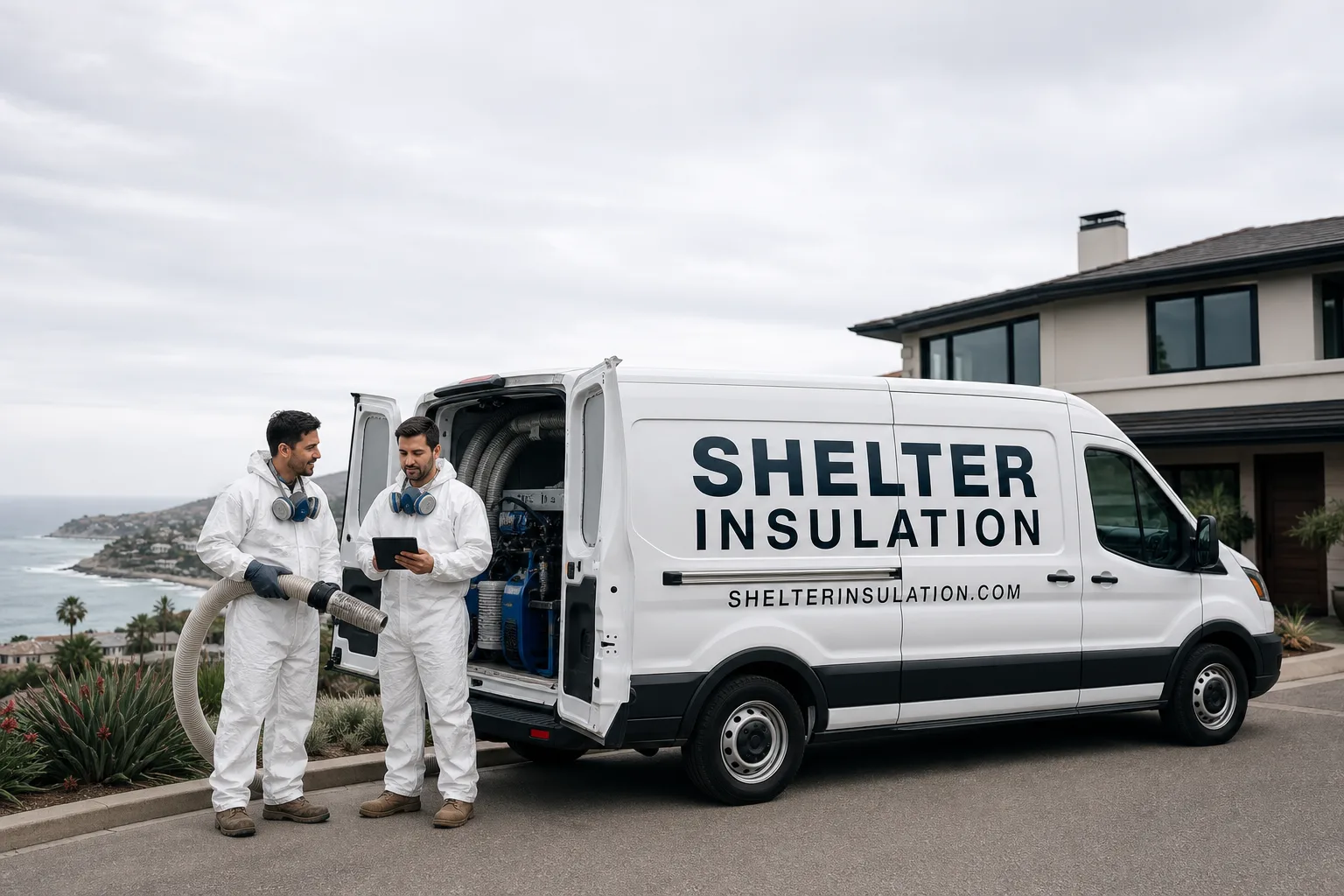
Long Beach attic insulation isn’t just about R-value. It’s about controlling what the marine layer does to a 1930s bungalow’s ceiling cavity every single morning. We work on homes from Belmont Shore to Bixby Knolls, and we’ve learned that the right material choice and moisture-prep sequence matters more here than almost anywhere else in LA County. Shelter Insulation serves all of Long Beach with same-week scheduling and crews who understand stucco-era construction, not just modern tract builds. Call (855) 341-3373 and we’ll walk your attic before recommending anything.
Why Shelter Insulation Is Long Beach’s Preferred Attic Insulation Company
Shelter Insulation is led by Alan Brecker, and our approach in Long Beach comes down to material honesty. We carry eight manufacturer brands: Owens Corning, Johns Manville, Knauf, Rockwool, CertainTeed, Icynene, Demilec, and GreenFiber. That means we don’t show up trying to sell the one product we stock. We match the product to the house.
Long Beach homeowners tell us the same thing in review after review: we spoke straight, explained why one material would work better than another, and didn’t push a premium upgrade where a standard batt did the job. That’s the whole point of being material-agnostic. A Belmont Shore bungalow and a Lakewood-adjacent post-war tract home need different things, and our Attic Insulation team is trained to see the difference before quoting.
Our crews reach most Long Beach zip codes: 90810, 90813, 90814, and 90815, within a day or two of your call. Local knowledge matters when you’re looking at knob-and-tube-era framing or trying to match insulation to an existing vapor situation. We’ve spent enough time in Long Beach attics to know what we’ll find before we climb the ladder.
Attic Mold Removal in Long Beach
Attic mold removal in Long Beach is often the first step of an insulation job, not a separate service. Our crews see it constantly in the 90814 and 90803 zip codes, where persistent onshore fog keeps roof decking damp for hours each morning. The mold grows on old insulation that has absorbed years of condensation, and it typically runs between $1,800 and $4,500 depending on the attic footprint and how far the growth has spread into the framing. Alan Brecker’s team treats the mold, removes the saturated material, and then addresses the ventilation that caused it in the first place.
Marine-Layer Condensation Treatment
In Long Beach, mold rarely comes from a roof leak. It comes from warm, humid air rising into a cool attic space and condensing on the underside of the decking every night. On foggy mornings, we find actual water droplets beading on rafters. We treat the affected wood with a mold-specific antimicrobial, then correct the airflow so the cavity can dry.
Full Cavity Drying and Vent Prep
After treatment, the attic needs moving air. We install or clear intake vents at the soffits, verify exhaust openings at the roof or gable, and ensure the insulation won’t block airflow. In Long Beach’s damp climate, skipping the drying phase means the mold returns within two seasons. We’d rather do it right once.
Attic Insulation Removal in Long Beach
Attic insulation removal in Long Beach is usually triggered by one of three things: mold, salt-air corrosion of the fasteners holding the batts in place, or original material that was never adequate and has compacted to near-zero performance. A full removal for a typical 1,200-square-foot Long Beach attic runs $1,500 to $3,900, which includes bagging, sanitizing the cavity, and haul-away. For older homes in 90813 and 90814, this is the only way to start a retrofitted insulation job cleanly.
Fastener Corrosion and Sagging Batts
The salt air near the beach doesn’t just attack door hinges and window hardware. It rusts the staples and wire supports holding attic insulation in place. We regularly see batts sagging away from the roofline or collapsing into the eaves. Those gaps kill the insulation’s performance regardless of what R-value the material once claimed, and the only fix is removal and reinstallation with corrosion-resistant fasteners.
Pre-Installation Cavity Inspection
Once the old material is out, we can inspect the actual ceiling framing and identify hidden issues: old knob-and-tube wiring, moisture staining on the top plates, or evidence of rodents. You cannot see any of that through sixteen inches of old fiberglass. In Long Beach’s older housing stock, the inspection step routinely changes the project scope, and we’d rather catch it before new material goes in.
Trusted Brands We Service in Long Beach
We install and warrant materials from Demilec, Owens Corning, GreenFiber, and the rest of our eight-brand lineup, so Long Beach customers aren’t locked into whatever one contractor happens to stock. We carry Demilec because their closed-cell spray foam performs exceptionally well in high-humidity coastal envelopes, and we carry GreenFiber because their cellulose product is a solid retrofitted answer for older attics where air-sealing is the priority. Because we install across all these lines, a Long Beach homeowner gets an honest material comparison instead of a brand pitch.
Common Attic Insulation Problems We See in Long Beach Homes
- Condensation-drenched insulation: In pre-1950s stucco bungalows without vapor barriers, moisture from the marine layer collects on the underside of the roof deck and drips onto whatever insulation is below, leaving it matted and useless and promoting mold. We see this most often in the fog-heavy neighborhoods west of Redondo Avenue.
- Rusted fasteners and sagging batts: Salt-air corrosion eats through the staples and wire hangers that hold fiberglass batts against the roof sheathing, especially in beachfront areas like Naples and the Peninsula. The batts peel away and leave the ceiling with zero coverage along the eaves.
- Blank attics in 1920s – 1950s bungalows: Huge portions of central Long Beach built between the wars have no insulation at all. The houses were framed for coastal weather before energy costs mattered, and the ceiling cavities are completely empty. Blown-in retrofits are the practical solution there.
- West-facing solar gain: In Naples and Belmont Shore, afternoon sun pounds the west-facing roof planes and turns the attic into an oven even on mild days. Without adequate ventilation and a higher-R material, that heat radiates down into the living space and makes air conditioners work against themselves.
Pricing for Attic Insulation in Long Beach, CA
We Also Serve Cities Near Long Beach
Shelter Insulation serves the full Long Beach area plus neighboring Signal Hill, Lakewood, Carson, and West Carson. If you’re just outside the city line, we can usually reach you just as quickly, and we quote the same local pricing across the corridor. One crew, every insulation need.
Serving Long Beach, CA — Our Local Coverage Area
We’re based in the Long Beach area and know this community well. Use the map below to see our service coverage — if you’re nearby, we can almost certainly help.
FAQs About Attic Insulation in Long Beach
The marine layer introduces moisture into attic cavities where inland attics stay dry. In Long Beach, fog rolls in most mornings and the roof deck sweats; without proper ventilation and a vapor management strategy, that moisture saturates insulation, drops its effective R-value, and feeds mold. We account for the moisture load before we select any material. Call (855) 341-3373 and we’ll explain what’s happening in your specific attic.
Most Belmont Shore homes built between 1930 and 1960 have no sheathing or vapor barrier, so decades of marine-layer humidity have already soaked and degraded whatever insulation was added later. Installing new material over moldy, compacted insulation just traps the problem. We remove it, treat the cavity, and then install. Call (855) 341-3373 to schedule an attic check.
Closed-cell spray foam from Demilec performs very well in Long Beach’s humid coastal environment because it also acts as an air and moisture barrier, and Rockwool batt insulation resists moisture and won’t promote mold. For older homes where budget matters, GreenFiber cellulose with proper ventilation can work. The brand matters less than matching the material to your attic’s specific moisture profile. Call (855) 341-3373 for a straight answer on your house.
In beachfront and bluff-top neighborhoods like Naples and the Peninsula, we recommend an attic insulation inspection every two to three years. The salt air and persistent fog accelerate fastener corrosion and moisture damage much faster than inland. A quick inspection catches sagging batts and early mold before they become a full removal project. Call (855) 341-3373 and we’ll add you to the schedule.
In most Long Beach attics, mold removal requires removing and replacing the affected insulation, not just treating the surface. Mold penetrates the fibers of fiberglass and cellulose, and treating only the wood leaves spores in the material itself. We remove the contaminated insulation, treat the framing, and install new material suited to your attic’s ventilation. Call (855) 341-3373 for an honest assessment of whether your insulation can be salvaged.
Written by Alan Brecker, Owner at Shelter Insulation, serving Long Beach and surrounding coastal communities.