
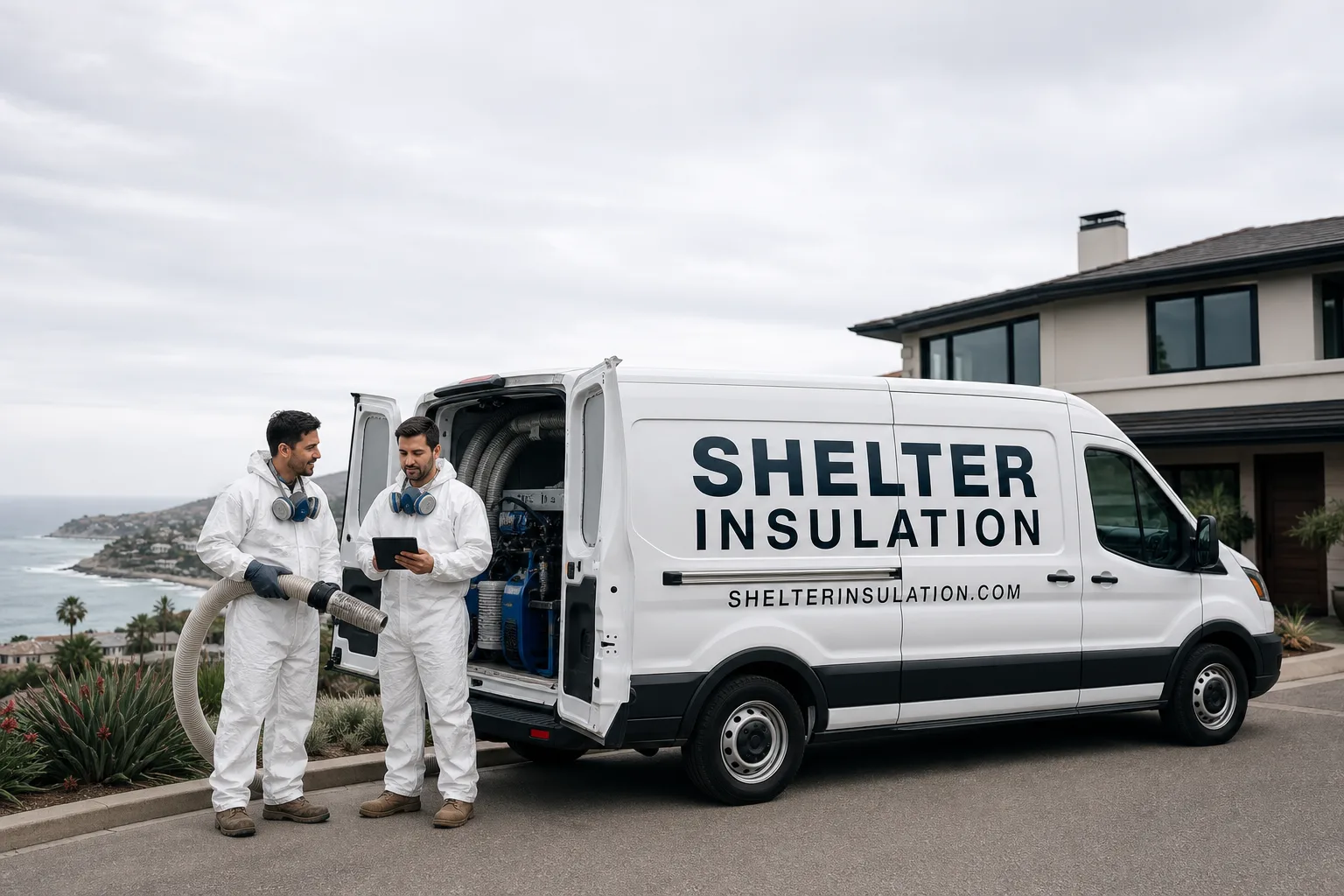
Fast, Reliable Attic Insulation Across Stanton
Attic insulation in Stanton, CA typically runs $1,200 to $3,800 for a full removal-and-replace on the city’s 1950s and 60s ranch homes, while a simple top-up over existing batts costs $600 to $1,500. That’s the answer most Stanton homeowners need before they call around. We know these houses well: shallow attics with original R-11 batts, converted garages off Katella, and ceilings that bake all summer under inland Orange County heat. If your ranch home still runs its AC all afternoon just to hold 80 degrees, call us at (855) 341-3373 for an honest read on what’s actually going on up there.
Our crews reach Stanton within the same day for inspections, and most top-up and removal jobs start within a week. We’re not strangers to 90680. We know the low-clearance attics near Beach Blvd, the bungalow tracts off Cerritos, and the converted garages on the Katella corridor. Local knowledge shapes everything: which attics need crawl boards before a crew can even reach the far joists, which cavities need zone treatment because a garage conversion never got its own insulation, and how Santa Ana winds stress every unsealed penetration in these older frames.
Why Shelter Insulation Is Stanton’s Preferred Attic Insulation Company
Stanton homeowners keep calling us for a specific reason: we treat every attic as a system, not a single material purchase. Most homes here were built when R-11 was code and attic ventilation meant a couple of gable vents. That changes the whole job. We bring the right material for the actual challenge – not whatever we happen to stock that week. Alan Brecker built Shelter Insulation around that principle. He carries Owens Corning, GreenFiber, Demilec, and Rockwool because each does something different in a Stanton attic, and homeowners deserve to know which one fits their house.
Our Stanton customers tell us the same thing: they called two or three companies and got two or three one-material pitches. Then they call us and get a straight explanation of fiberglass versus cellulose versus spray foam in the context of their specific attic. We don’t push one product line. We install blown-in fiberglass, loose-fill cellulose, batt insulation, and both open-cell and closed-cell spray foam. One crew handles all of it, which means no coordination hassle when a house needs dense-packing in one cavity, spray foam rim joists in another, and R-38 blown across the main attic.
That single-contractor accountability matters in Stanton, where unpermitted garage conversions near Beach and Katella create odd thermal zones. One company, one warranty conversation, one number to call when something needs checking. That’s how Alan runs it, and that’s why Stanton homeowners stick with us.
Radiant Barrier in Stanton
Radiant Barrier in Stanton addresses the most persistent problem these ranch homes face: solar gain through hot roof decks converting the entire attic into a heat box that radiates down through thin drywall ceilings. We see single-story homes off Katella where the attic hits 130 degrees by 2 p.m. in July, and the ceiling below feels warm to the touch even with the AC running. A radiant barrier sheet installed to the underside of the roof rafters reflects most of that radiation back toward the roof deck, cutting attic temperatures by 20 to 30 degrees and taking real load off the cooling system.
What a Stanton homeowner needs to understand is that radiant barrier is not insulation. It’s a radiation reflector. It works alongside insulation, not instead of it. In shallow 1950s and 60s attics where you can’t easily reach R-49 depth, radiant barrier becomes especially valuable because it attacks the heat before it ever reaches the insulation layer.
How Radiant Barrier Performs in Low-Clearance Attics
Stanton’s shallow attics are cramped and often impossible to move through standing up. Our crews work low and slow, stapling perforated radiant barrier to rafter undersides in spaces where most insulation contractors won’t even take the job. The perforated material lets moisture pass through, which prevents the condensation trapping that can happen in humid inland air. For a typical 1,000 to 1,200 square foot ranch in 90680, radiant barrier installation runs $1,200 to $2,600 depending on attic geometry and access difficulty.
When to Pair Radiant Barrier With New Insulation
The biggest mistake we see in Stanton is homeowners installing radiant barrier alone and expecting an energy bill miracle. If the attic still holds slumping R-11 batts under that barrier, the house still leaks conditioned air straight through the ceiling. The right sequence in these old ranch attics: remove failed batts, air-seal top plates and can lights, install radiant barrier, then blow insulation to depth. On homes off Cerritos and in the tracts along Beach where air conditioners run constantly, that sequence produces the most noticeable cooling difference.
Attic Cleaning Services in Stanton
Attic Cleaning Services in Stanton start with a simple fact: most of these 60-year-old attics have never been cleaned, and the accumulated dust, rodent debris, and collapsed insulation have compromised both thermal performance and air quality. We remove old insulation, vacuum out dust and contamination, sanitize the deck, and prep the space for new insulation. In Stanton’s older ranchers, this is often the only way to honestly assess what’s happening under the joists before putting fresh material down.
For homes where the original R-11 batts have slumped off the joists and the visible drywall is bare, cleaning isn’t optional. It’s step one. A typical attic cleaning in Stanton runs $800 to $1,800 depending on square footage and contamination level. Add full removal and disposal of old insulation and the range goes up.
Rodent and Dust Decontamination in Older Ranch Attics
Santa Ana winds push dust and smog particulates through every unsealed attic penetration in Stanton, and the humid summer air compounds the problem by settling that dust into the fiberglass. Rodent activity is common in these older tracts, especially where garage conversions punched holes through fire-rated walls and never sealed them. Our cleaning protocol includes sanitization and fresh insulation, which is why we handle cleaning and insulation as one job rather than splitting it between two contractors.
Clearing the Path for Air Sealing and Top-Up
Here’s a sequence most Stanton homeowners don’t hear from other companies: you cannot properly air-seal a dirty attic. Top plates, can light housings, and wall penetrations all have to be visible and clean before sealing. Attic cleaning in Stanton is the unglamorous prep work that makes the insulation itself perform. Skipping it is why so many top-up jobs fail to change the comfort level in these old ranch homes.
What happens when you call
- 1
A real person answersNo phone trees — you reach a local pro.
- 2
You get an upfront price rangeHonest numbers before anyone is dispatched.
- 3
A background-checked tech heads outLicensed & insured, dispatched right away.
- 4
You approve before work beginsNothing starts until you say go.
Trusted Brands We Service in Stanton
Shelter Insulation carries Owens Corning fiberglass because it’s the most predictable, code-simple material for shallow ranch attics, and it belts from our rigs consistently. We stock GreenFiber cellulose for dense-pack and odd cavity work, especially in converted garage zones where the existing framing doesn’t suit batts. And for homeowners who want the tightest possible air seal in a cathedral ceiling or a finished attic space, Demilec spray foam is something we can install without calling in a second crew. We carry these because each solves a specific Stanton problem, not because a distributor offered us a rebate. That’s material-agnostic selection, applied to 90680’s actual housing stock.
Common Attic Insulation Problems We See in Stanton Homes
- Slumped R-11 batts in 1950s – 60s ranch attics. The original fiberglass was thin, and after six decades of summer attic temperatures in the 130s, it’s fallen off the joists. Bare drywall is a thermal bypass, and the ceiling below becomes a heat radiator.
- Unsealed top plates and recessed can lights leaking conditioned air. These homes were built before air sealing was code. Every can light is a hole straight into the attic, and on muggy inland days the ceiling plane acts like a chimney for cool air.
- Unpermitted garage conversions with no attic insulation at all. Near Beach and Katella, a significant share of garages have been turned into living space without a permit. The attic cavity above stays uninsulated, hot, and siphons conditioned air from the house proper.
- Santa Ana wind dust buildup degrading existing insulation. The same unsealed penetrations that leak air also pull in dust, smog, and fine particulates from Santa Ana events. Over time, batts become loaded with debris, losing thermal performance and hurting indoor air quality.
Pricing for Attic Insulation in Stanton, CA
We Also Serve Cities Near Stanton
From our crews’ perspective, Attic Insulation in Stanton runs alongside regular work in Garden Grove, Cypress, Westminster, and Midway City. The housing stock is similar across these north Orange County tracts: 1950s and 60s ranches with original insulation long past service life. If you’re in any of these cities, our Attic Insulation team covers the full scope: removal, air sealing, top-up, and full replacement.
Serving Stanton, CA — Our Local Coverage Area
We’re based in the Stanton area and know this community well. Use the map below to see our service coverage — if you’re nearby, we can almost certainly help.
FAQs About Attic Insulation in Stanton
My 1960s ranch near Beach and Katella still has the original attic insulation – can you just add more on top?
Yes, but only if the original batts are still sitting flat and dry. In most Stanton ranches from that era, the R-11 batts have slumped off the joists, and adding new insulation on top would trap the failure underneath. The correct sequence is removal of the failed material, air sealing, then blowing to R-38 in one pass. Call (855) 341-3373 and Alan Brecker can help you figure out what your attic actually needs before you spend money.
My garage was converted to a bedroom without permits – does that change my attic insulation job?
Yes. An unpermitted garage conversion in Stanton creates a separate attic cavity that was probably never insulated. If you just top off the main house attic, the converted garage keeps siphoning conditioned air and staying hot. We treat the conversion as its own thermal zone: cap and seal its ceiling cavity, insulate it appropriately, then insulate the main house separately.
How shallow are Stanton attic spaces, and does that limit what insulation you can install?
Most 1950s and 60s ranch attics in Stanton have low-clearance geometry, often under five feet at the ridge, and crews work on knees and bellies. That limits maneuvering but not the insulation value. Blown-in fiberglass or cellulose can reach R-38 even in shallow spaces, and radiant barrier installs on rafter undersides regardless of headroom. The limit is on access comfort, not on what we can install.
Does inland Orange County’s hot, humid summer make radiant barrier worth it on my Stanton home?
Yes, more than in most cities. Stanton’s summer attic temperatures regularly exceed 130 degrees in unventilated ranch attics, and the humidity from late summer monsoonal pushes makes that radiation load worse on the ceiling below. Radiant barrier cuts that heat before it reaches the insulation, lowering attic temperatures by 20 to 30 degrees and reducing the cooling load on your AC. In a shallow Stanton attic, it’s one of the highest-value upgrades you can make.
What does attic cleaning involve on these older Stanton homes, and why does it come before new insulation?
Attic cleaning on older Stanton homes involves removing old insulation, vacuuming dust and debris, sanitizing the deck, and exposing every penetration that needs sealing. It comes before insulation because you cannot properly air-seal top plates, can lights, and gaps through a layer of dust and collapsed fiberglass. If you skip it, the new insulation sits on top of unresolved air leaks and the comfort problem persists. For an honest assessment of your Stanton attic, call (855) 341-3373 and we’ll inspect it first.
We serve all of Stanton’s 90680 zip code, including the tracts off Beach Blvd, Katella Avenue, and Cerritos Avenue. Whether your ranch has original insulation, a converted garage, or both, one call gets a straight answer. Reach Alan Brecker and the Shelter Insulation team at (855) 341-3373 for a free estimate on attic insulation in Stanton.
Written by Alan Brecker, Owner at Shelter Insulation, serving Stanton and surrounding Orange County communities.