
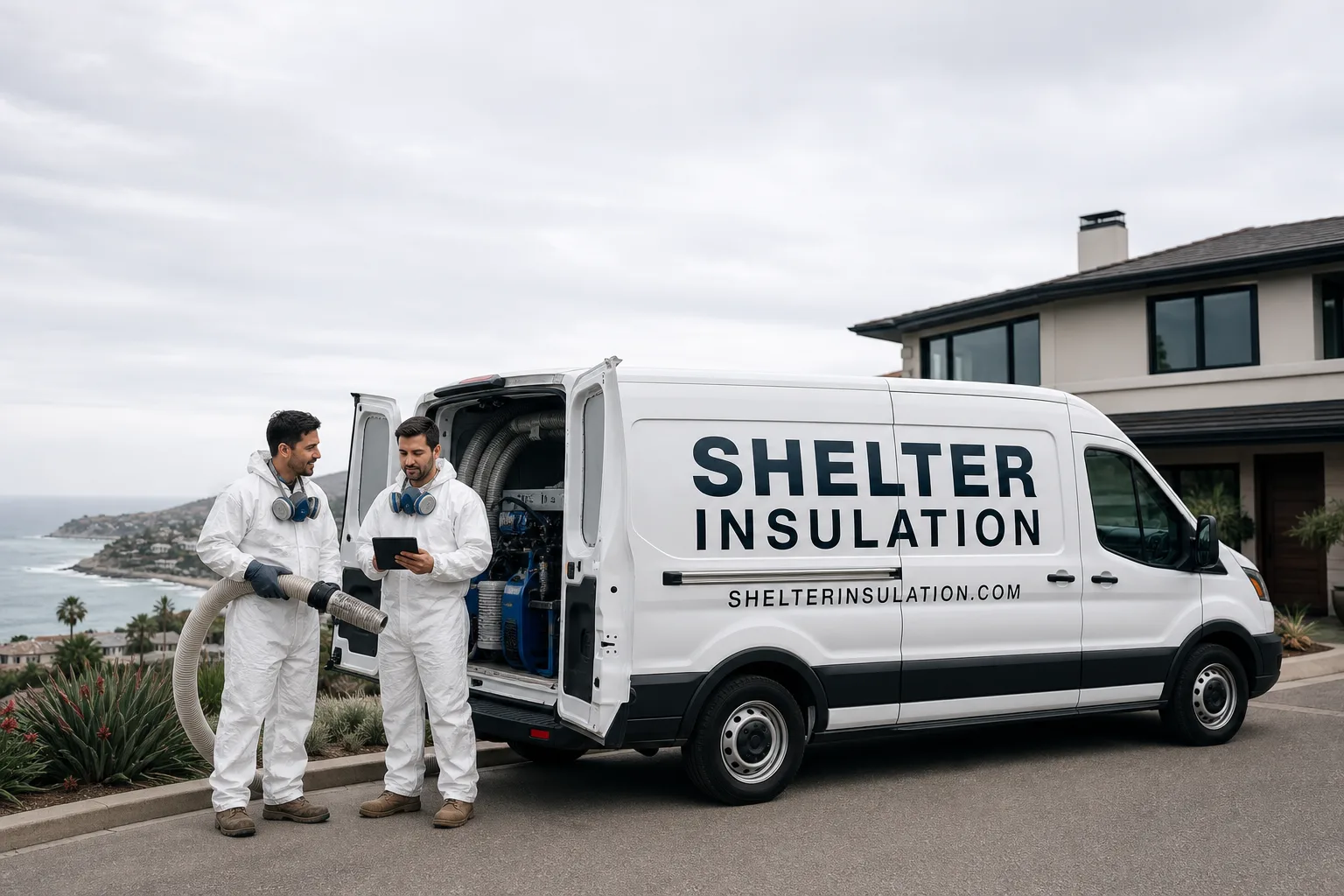
Fast, Reliable Attic Insulation Across Lake Forest
Attic insulation in Lake Forest, CA isn’t a one-size-fits-all job. Most of the homes we work on across 92630 were built between the late 1960s and the 1990s, and almost all of them have the same problem: original fiberglass batts that have drifted, compressed, and settled into a thin, uneven layer while the hot inland foothill sun does its work from above. The fix usually involves air sealing, re-securing what’s there, and topping off to a consistent R-value, not just dumping more material over the problem. Our team at Shelter Insulation works across Lake Forest weekly, from the Portola Hills ridgelines down to the tract neighborhoods off El Toro Road, and we’ll walk you through exactly what your attic needs. Call (855) 341-3373 for a free estimate from Alan Brecker and our crew.
Why Shelter Insulation Is Lake Forest’s Preferred Attic Insulation Company
Lake Forest homeowners call us because we tell them what’s actually going on up there. We’ve opened enough attics in this city to know what the Santa Ana winds do to insulation over a few decades. Batt insulation that was laid flat in 1985 doesn’t stay flat. It drifts. It compresses. It leaves bare drywall directly over the living space, and that’s where your upstairs bedrooms start to bake in July. Our material-agnostic approach matters here too. We carry Owens Corning, Johns Manville, Knauf, Rockwool, CertainTeed, Icynene, Demilec, and GreenFiber because a 1970s tract home with a ventilated attic needs something different than a 1990s infill build with can lights and vaulted ceilings. Residents across 92630, from Foothill Ranch to Lake Forest proper, get the same straight answer: the right material for your home’s specific challenge, not whatever product we happen to stock the most of. Alan Brecker and the Shelter Insulation team have spent enough time in Lake Forest attics to know this city’s housing stock inside and out.
Attic Cleaning Services in Lake Forest
Attic Cleaning Services in Lake Forest start with the dust problem most homeowners don’t see until it’s pointed out. Wind-driven dust from the Saddleback foothills rides the Santa Anas through ridge and canyon-facing vents, and over twenty or thirty years it settles as a fine gray layer packed into the top of your insulation. That layer doesn’t just look bad; it holds moisture and hides how much the insulation underneath has actually degraded. Before we add any R-value to a Lake Forest attic, we typically recommend removing the contaminated top layer, cleaning out the settling, and giving us a clean substrate to work with. A typical attic cleaning in Lake Forest runs $1.50 to $3.00 per square foot depending on access, depth of contamination, and whether rodent activity is present. For most 1,500 to 2,000 square foot homes in 92630, that lands between $2,200 and $4,800.
Dust and Debris Removal
Decades of wind-driven dust don’t just sit on top of your batts; it works its way down between them. We vacuum out the old material, remove loose debris, and expose the top plates and penetrations so we can see exactly where air is leaking. This is the step most insulation contractors skip, and it’s the step that makes a Lake Forest top-off actually work.
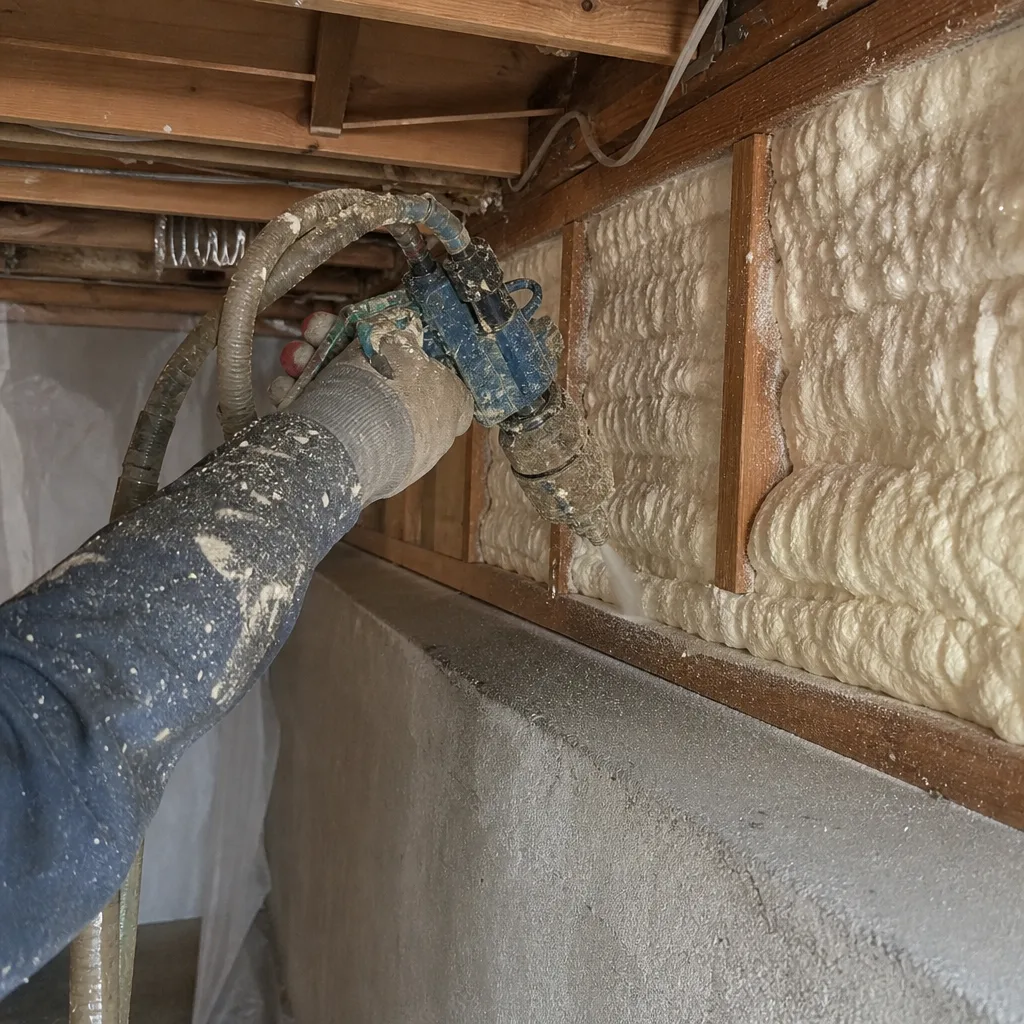
Pre-Insulation Prep
If you’re planning to add new blown-in insulation or lay fresh batts, the attic needs to be clean first. We handle the full prep, including removing old loose-fill that’s compacted, bagging it, and disposing of it properly. Then your new insulation goes down on a surface that’ll actually let it perform.
What happens when you call
- 1
A real person answersNo phone trees — you reach a local pro.
- 2
You get an upfront price rangeHonest numbers before anyone is dispatched.
- 3
A background-checked tech heads outLicensed & insured, dispatched right away.
- 4
You approve before work beginsNothing starts until you say go.
Attic Mold Removal in Lake Forest
Attic Mold Removal in Lake Forest is a service we’re asked about more often than you’d expect from a dry, inland city. The problem isn’t rain; it’s moisture from the living space below. When builder-grade recessed cans and unsealed top plates leak conditioned air into a ventilated attic, that warm, humid air hits the cooler roof deck and condenses. Repeat that cycle through enough winter mornings and mold takes hold on the sheathing and framing. If you’re seeing dark staining on the underside of your roof deck or smell something musty when you open the attic hatch, call us before you re-insulate. Mold removal in a Lake Forest attic typically runs $2,000 to $6,500 for a standard tract home, with larger or heavily affected attics going higher. The work involves containment, removal of affected insulation, treatment of framing and sheathing, and drying before new insulation goes in.
Assessing the Damage
We don’t quote mold work blindly. Alan Brecker or a lead tech will get into the attic, check the sheathing, the rafters, and the insulation itself, and tell you whether this is a surface issue or something deeper. Most Lake Forest mold problems we see are concentrated around the recessed lights and the top plates, which tells us the root cause is air leakage, not a roof leak.
Mold Removal and Prevention
Once the mold is treated and the bad insulation is out, the real fix is sealing the air leaks that caused it. We air-seal the penetrations, the top plates, and the can light housings before any new insulation goes down. That’s what keeps the mold from coming back, and it’s why we handle both the removal and the re-insulation with one crew instead of sending you to a mold specialist and then a separate insulation company.
Trusted Brands We Service in Lake Forest
We carry Owens Corning, Johns Manville, Knauf, Rockwool, CertainTeed, Icynene, Demilec, and GreenFiber because no single brand solves every attic in this city. For a wind-scoured Foothill Ranch attic with drifted batts, we’ll often reach for Owens Corning fiberglass to re-lay and top off the existing material. For a newer Lake Forest infill build with airtight construction goals, Icynene or Demilec open-cell foam seals and insulates in one pass. For homeowners who want fire resistance and sound attenuation near the canyon edges, Rockwool goes into the lineup. We stock common materials locally for Lake Forest jobs, which keeps turnaround tight when you’re waiting on a fix before the next heat wave. One crew, every insulation need, from batt to blown-in to spray foam.
Common Attic Insulation Problems We See in Lake Forest Homes
- Santa Ana wind scouring: Fiberglass batts laid in the 1970s and 1980s don’t stay put. The winds push through ridge and canyon-facing vents, drift the batts against the far gable, and leave bare drywall directly over the living space. We find this pattern in nearly every Lake Forest tract home we open, and it’s almost never seen in coastal cities.
- Builder-grade air leakage: Original top plates and recessed can penetrations were never sealed. That means conditioned air from your living room leaks into an attic that’s already 130 degrees in the summer, driving your cooling bill up while the added R-value underperforms.
- Settled and compressed loose-fill: Cellulose and older loose-fill fiberglass settle under their own weight over twenty-plus years of inland heat cycling. What started as R-38 might be performing like R-19 or worse by the time we inspect it.
- Wind-driven dust and ember intrusion: Homes near the ridgelines and canyons, especially in the Portola Hills area, see fine dust and occasional ember grit pushed through vents during Santa Ana events. It packs into the top layer of insulation and masks how much the material has already degraded.
Pricing for Attic Insulation in Lake Forest, CA
A full Attic Insulation upgrade on a typical 92630 tract home runs between $3,500 and $8,500, depending on the square footage, the current R-value, and whether air sealing and cleaning are included. Blown-in attic insulation top-ups are usually the most affordable route, landing around $1,800 to $3,800 for a standard three-bedroom home. Batt insulation replacement runs higher, typically $2,500 to $5,000, because the old material has to come out first. If your attic needs mold remediation before insulation, figure an additional $2,000 to $6,500 on top. The main cost drivers in Lake Forest are access (tight scuttle holes and low-slope roofs are common in 1970s builds), the depth of existing contaminated material that needs removal, and whether we’re air-sealing a dozen or more penetrations. Call (855) 341-3373 and we’ll give you a firm number before any work starts, not a vague range.
We Also Serve Cities Near Lake Forest
Beyond Lake Forest, our crew covers the surrounding South Orange County foothill communities on a regular schedule. We’re in Foothill Ranch and Portola Hills weekly, often for the same wind-scour and settlement patterns we see across 92630. Mission Viejo and Laguna Woods are also part of our service area, and we bring the same full line of Owens Corning, Johns Manville, Knauf, and Rockwool materials to every job in the Saddleback Valley. If you’re in one of those nearby cities, call us at (855) 341-3373 and we’ll get you on the schedule.
Serving Lake Forest, CA — Our Local Coverage Area
We’re based in the Lake Forest area and know this community well. Use the map below to see our service coverage — if you’re nearby, we can almost certainly help.
FAQs About Attic Insulation in Lake Forest
It’s usually both. The original fiberglass batts in a 1980s Lake Forest home are almost certainly drifted, compressed, and performing well below their labeled R-value, especially if your attic has ridge or canyon-facing vents that catch the Santa Anas. Adding blown-in insulation on top of degraded batts without addressing the drift and air leakage just buries the problem. We’ll inspect it, tell you what’s actually up there, and recommend either re-laying and topping off or a full removal and replacement. Call (855) 341-3373 for an honest assessment.
Lake Forest sits inland, up against the Saddleback foothills, where summer attic temperatures run noticeably hotter than they do in, say, Laguna Beach or Newport Beach. Add in the seasonal Santa Ana winds that scour and drift loose-fill and batt insulation, and you get a combination of heat cycling, settling, and physical displacement that coastal homes simply don’t experience. That’s why we emphasize air sealing and re-securing material here, not just blowing in more R-value.
Yes. When sustained winds hit ridge and canyon-facing roof vents, they pressurize the attic and physically push loose insulation around. We regularly find batts drifted into thick mounds against the downwind gable with bare drywall over the living space, a pattern coastal OC attics don’t show. If your home backs up to open hillside or sits near a canyon mouth in Portola Hills or Foothill Ranch, this is likely happening in your attic right now.
We carry Owens Corning, Johns Manville, Knauf, Rockwool, CertainTeed, Icynene, Demilec, and GreenFiber, and a Lake Forest top-off usually calls for blown-in fiberglass from Owens Corning or Johns Manville, or cellulose from GreenFiber. The material choice depends on your attic’s access, existing insulation type, and whether you want added fire resistance near the canyon edge. We’ll recommend the right one for your specific attic, not just the one we stock the most of.
Look for dark staining on the underside of the roof sheathing, especially near recessed lights and top plates, and pay attention to any musty smell when you open the attic hatch. In Lake Forest, mold almost always traces back to air leakage from the living space below, not roof leaks. If you see any of those signs, call (855) 341-3373 before adding insulation; we’ll assess whether removal is needed and give you a clear plan.
Written by Alan Brecker, Owner at Shelter Insulation, serving Lake Forest and South Orange County with material-agnostic insulation solutions since day one.